▸ One road, one hundred boys, no finish line
The Long Walk: Stephen King’s Most Disturbing Novel
| SUBJECT | Stephen King |
| PUBLISHED | THE LONG WALK (WRITTEN 1966-67; PUBLISHED 1979 AS RICHARD BACHMAN) |
| RUNTIME | 15:53 |
| STATUS | WALK IN PROGRESS |
Before Carrie made him famous, Stephen King wrote The Long Walk. He started it as a college freshman in 1966, at eighteen, and then let it sit in a drawer for thirteen years. When it finally came out in 1979 he published it under a fake name, Richard Bachman, as if he still wasn’t sure he wanted his own on it. It’s the first novel he ever finished and, for my money, one of the most disturbing things he ever wrote.
A note before we go on: I discuss the whole book, including the ending. If you’d rather stay unspoiled, walk off here.

What it’s about
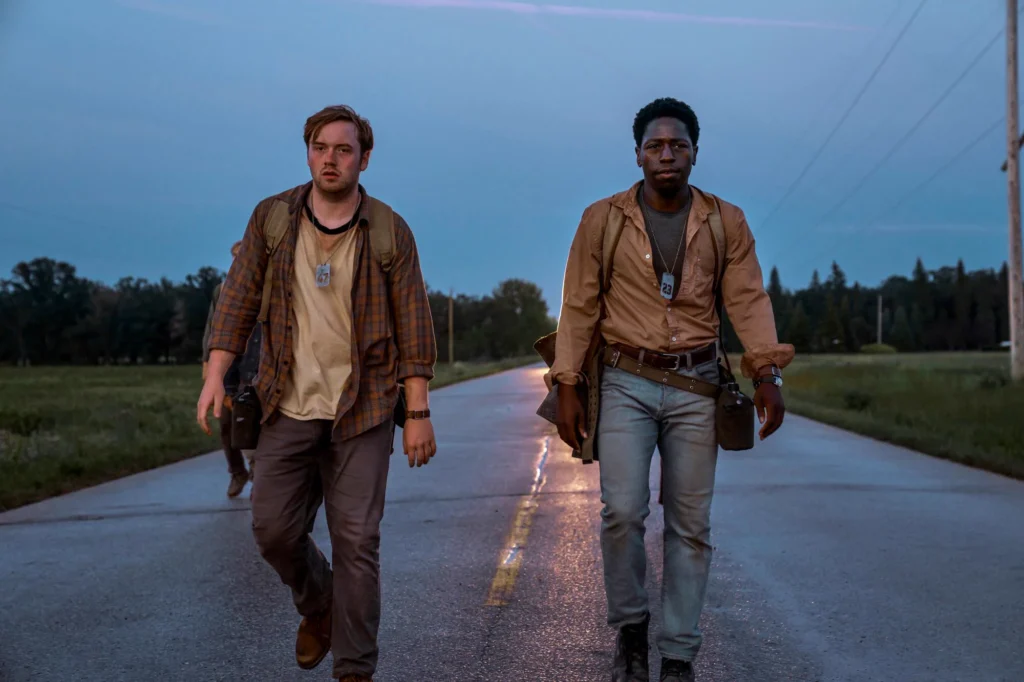
Every year, in a slightly altered America run by a figure called the Major, one hundred teenage boys volunteer for a contest called the Long Walk. The rule is simple: You walk south, and you never stop. Drop below four miles an hour and a soldier gives you a warning. Three warnings, and the next time you slow down they shoot you dead by the side of the road. There’s no finish line. The Walk ends when ninety-nine boys are dead and one is still moving. The survivor gets the Prize: whatever he wants, for the rest of his life.
“Any game looks straight if everyone is being cheated at once.”
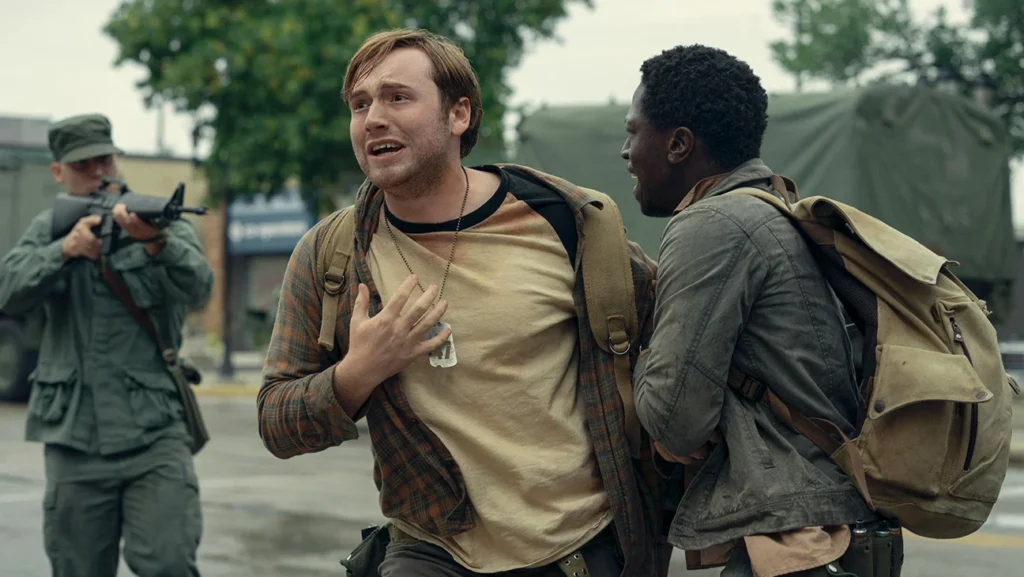
We follow Ray Garraty, sixteen, walker number 47, from the starting line at the Canada border down through Maine. King spends the whole book on that road. There aren’t any chapters that cut away to the wider world, nobody is being rescued, no rules-lawyering your way out. Just boys walking, talking, and dropping one by one, while crowds gather along the highway to watch, cheer, and place bets on who dies first.


The book King buried, then disowned
King was a teenager himself when he wrote this, a kid at the University of Maine watching Vietnam turn into the first televised war, watching a country send boys off to die on a schedule and gather around the set to watch it happen. You can see it in every page. And it clearly scared him, because the man who would go on to publish killer cars and haunted hotels sat on this one for over a decade and then hid behind Bachman when he finally let it out.
You can see why. A killer clown is safe, because it isn’t real. The Long Walk is about a crowd that turns out to watch children destroy themselves for entertainment, and about the children who sign up. That’s harder to shrug off, because we recognize the crowd.

They volunteered
Here’s the part that stays with me. Nobody drags these boys to the starting line. They all apply willingly. They know the odds are one in a hundred, they know what happens to the other ninety-nine, and they walk out onto that road with their eyes open. King never fully explains why, and the not-explaining is the point. When someone asks Garraty why he entered, he can’t really say. He wanted something he can’t name, and the Prize, “anything you want for the rest of your life,” was a big enough blank to pour that wanting into.
“They’re animals, all right. But why are you so goddam sure that makes us human beings?”
He builds the rest of the field out of boys you come to know just well enough to grieve.
- Peter McVries, the one with the scar and the closest thing to a friend Garraty finds out there, figures out early that they’re all going to die and decides the only honest response is to treat it as a joke.
- Scramm, the married one, whose seventeen-year-old wife Cathy is pregnant back home. He’s the odds-on favorite, the strongest walker on the road, and when he catches pneumonia and knows he’s finished, the other boys quietly agree that whoever wins will make sure Cathy and the baby are taken care of.
- Art Baker, one of the kindest of them, whose uncle was an undertaker, and who talks about wanting a lead-lined casket when it’s his turn.
- Stebbins, walker 88, who hangs back at the rear the whole time and seems to be playing an entirely different game.
The machine we ended up building
When I first read this I thought it was about war and the draft, and it is. But read it now, in a world of engagement metrics and creator burnout, and a second meaning surfaces that King couldn’t have planned and nailed anyway.
He built a system where ordinary people volunteer to perform their own slow destruction, in public, for a crowd that consumes the suffering and moves on, and where the platform profits no matter who dies. That’s the attention economy. Every creator who signs up for the grind knowing the numbers are brutal, who mines their own life for content until there’s nothing left, is walking a version of that road, and there’s a crowd on the shoulder placing bets.
The three-warning system is the sharpest piece of it. The cruelty is the uncertainty. You never know when the last warning is coming, so you walk in a permanent low panic, monitoring your own pace, never sure you’re fast enough. Anyone who’s watched their YouTube or social reach quietly collapse for reasons no one will explain knows that feeling. King described the psychology of the algorithm decades before the algorithm existed, because he understood the machinery underneath it: reward that can vanish without cause, and a crowd that keeps watching.
The crowd is the quiet accusation of the book. They line the route, they wave, they never once try to stop it. The spectators are us. King’s real subject is the people who show up to watch, and the fact that the Walk only happens because they keep coming, more than the boys who walk.

The dark figure
Garraty wins. He’s the last one moving, and by then he’s so far gone, physically and mentally, that winning barely registers.
Late in the Walk, Stebbins finally tells him the truth: he’s the Major’s illegitimate son. He entered believing that winning would earn him a place in his father’s house, and then realized the Major had only ever used him as the “rabbit,” the one the others chase to keep the whole cruel race moving. Stebbins clutches at Garraty and drops dead almost at the finish, and the acknowledgment he wanted never comes.
And then the last image, the one the whole book is named for. Garraty, the winner, sees a dark figure up ahead on the road, beckoning him forward, and he keeps walking toward it. King never tells you who or what it is: Death, a hallucination, the walk that simply never ends. Readers who know King’s wider universe hear an echo of Randall Flagg, his recurring Dark Man, the Walkin’ Dude. However you read it, the message is the same and it’s brutal: there was never a prize worth the walk. Even the winner doesn’t get to stop. The system was never built to make winners. It was built to make a spectacle, and it uses you up either way.
Final thoughts
This is a teenager’s book in the best sense. It’s raw, it’s angry, it doesn’t have the craft of the later novels, and it doesn’t need it. King had one idea, a road you can’t leave, and he had the nerve to just stay on it and make you feel every mile.
The Long Walk predates Battle Royale and The Hunger Games by decades, and it’s stranger and sadder than either. Read alongside the early run, Carrie, ‘Salem’s Lot, The Shining, the buried Rage, the stories in Night Shift, and The Stand, it’s the one that shows you what King was afraid of before he had the machinery to dress it up. No monster. Just a road, a crowd, and a hundred kids who signed up.
Francis Lawrence’s 2025 film adaptation makes some big changes to all of this, from the walking pace to who lives and how it ends. I walked through every one in The Long Walk: every big change the movie made to Stephen King’s book.
Have you read it? Tell me what landed and what didn’t in the comments.
“Just go on dancing with me like this forever and I’ll never tire. We’ll scrape our shoe on the stars and hang upside down from the moon.”
Read The Long Walk yourself
Mysterious Galaxies is a Libro.fm and Bookshop.org affiliate. If you buy the audiobook or physical book through the links below, the channel earns a small commission at no extra cost to you.


Where does The Long Walk land among King’s 1970s books? I ranked all eight of them, worst to best, in Every Stephen King Book of the 1970s, Ranked (it came in at number five).
FAQs
What is the story The Long Walk about?
The Long Walk is set in a grim alternate America where, once a year, one hundred teenage boys volunteer for a state-run endurance contest. They walk south from the Canada border and must keep a minimum pace of four miles per hour. Drop below it and you get a warning; collect three warnings and the soldiers escorting the Walk shoot you dead. There is no set finish line. The contest ends only when ninety-nine boys have died and one is still walking, and the lone survivor wins the Prize, anything he wants for the rest of his life. The novel follows sixteen-year-old Ray Garraty and the boys he befriends as they walk, and slowly die, in front of cheering crowds.
What is the moral of The Long Walk?
The book resists a tidy moral, but its hardest lesson is about consent and spectacle: a society will turn human suffering into entertainment, and people will volunteer for their own destruction, when the culture makes that destruction look like a path to something better. The boys aren’t forced onto the road; they sign up. And the crowd that lines the route never has to be cruel, only present. The closest thing to a moral is that the Prize was never worth the Walk, and that even winning doesn’t set you free.
What did Stebbins want in The Long Walk?
Stebbins, walker number 88, reveals near the end that he is the Major’s illegitimate son. He entered the Walk believing that winning would finally earn him a place in his father’s household, the recognition he’d never been given. Late in the contest he realizes the truth is worse: the Major had only ever used him as the “rabbit,” the pacesetter the other boys chase to keep the whole race moving. He dies almost at the finish, and the acknowledgment he wanted never comes.
What is the metaphor of The Long Walk?
The Long Walk works as a metaphor on several levels. Written by a college-age King in 1966 and 1967, it reads first as the Vietnam draft: boys marched off to die on a schedule while the country watches on television. It’s also a plain metaphor for mortality itself, the walk we’re all on and can’t stop. Read today, it lands as a metaphor for spectacle and the attention economy, a machine that runs on ordinary people performing their own slow ruin for a crowd that consumes it and moves on.
What was the dark figure in The Long Walk?
At the very end, Garraty has won, but he’s so physically and mentally destroyed that he sees a dark figure ahead of him on the road, beckoning him onward, and he keeps walking toward it. King never explains what it is, and the ambiguity is deliberate. It can be read as death, as a hallucination of Garraty’s broken mind, or as the Walk that simply never ends. Readers familiar with King’s wider universe often connect it to Randall Flagg, his recurring “Dark Man” and “Walkin’ Dude.” Whatever it is, it tells you the Walk didn’t stop just because Garraty won.
How old was Stephen King when he wrote The Long Walk?
King began The Long Walk as a freshman at the University of Maine in 1966, when he was eighteen, and worked on it into his nineteenth year. It was the first novel he ever completed. He didn’t publish it until 1979, thirteen years later, and even then he released it under the pseudonym Richard Bachman rather than his own name.
What is the point of The Long Walk?
The point is a warning. King takes the entertainment culture he saw forming around him, public spectacle, televised death, ordinary people turned into content, and runs it to its logical endpoint to show where it leads. His argument is that these systems don’t get imposed on us from above; we volunteer for them, and they only keep working because a crowd keeps showing up to watch. The Walk is what happens when a society agrees to treat human destruction as a show.
How many miles is The Long Walk in Stephen King’s novel?
There is no fixed distance. The Walk has no finish line; it ends only when a single boy is left alive, so the mileage depends on how long the last two survivors can keep moving. In the novel the boys cover well over three hundred miles, walking from the far northern tip of Maine down toward Massachusetts. Fans who have mapped the route along its real highways put the winning distance at roughly 350 to 360 miles.
How fast do they have to walk in The Long Walk?
The walkers have to maintain a minimum of four miles per hour. If a boy drops below that pace, he gets a verbal warning; hold the pace for a full hour and one warning is erased. Once you’re carrying three warnings, the next time you slow down the soldiers shoot you. So the boys walk in constant tension, never allowed to rest, never sure when a lapse will be the fatal one.
Where does The Long Walk start and end?
The Walk begins at the Canada border in far northern Maine and heads south, mostly along U.S. Route 1, passing through Maine towns and on toward New Hampshire and Massachusetts. There’s no predetermined endpoint; it finishes wherever the second-to-last walker finally falls. Readers who have traced the route against real geography place the ending in the Massachusetts stretch, near Danvers, a few hundred miles from where the boys set out.
Sources
- Patrick Coston, “The Long Walk: The Route” (fan mapping of the walk’s route and total distance along U.S. Route 1)
- The Long Walk – Fine Art Print – Gerry Grace
SOURCE · Stephen King, The Long Walk (written 1966-67; published 1979 as Richard Bachman). SERIES · Into the King-Verse.
Transmissions from ground control