▸ King's great American apocalypse
The Stand: Stephen King’s Great American Apocalypse
| SUBJECT | Stephen King |
| PUBLISHED | THE STAND (1978; COMPLETE & UNCUT 1990) |
| RUNTIME | 1:13:50 |
| STATUS | SIGNAL FROM THE FREE ZONE |
Stephen King has called The Stand his great American novel, and for once, the hype is his own. He set out to write an epic on the scale of The Lord of the Rings, grounded in modern American life, and what he produced is a thousand-page apocalypse that works as a horror novel, a road novel, a political thriller, and a religious allegory all at once. It came out in 1978, and many readers, King included, still think it’s the best thing he’s done.
A note before we go on: I discuss the whole book, including the ending. If you’d rather stay unspoiled, step off here.
“The place where you made your stand never mattered. Only that you were there…and still on your feet.”
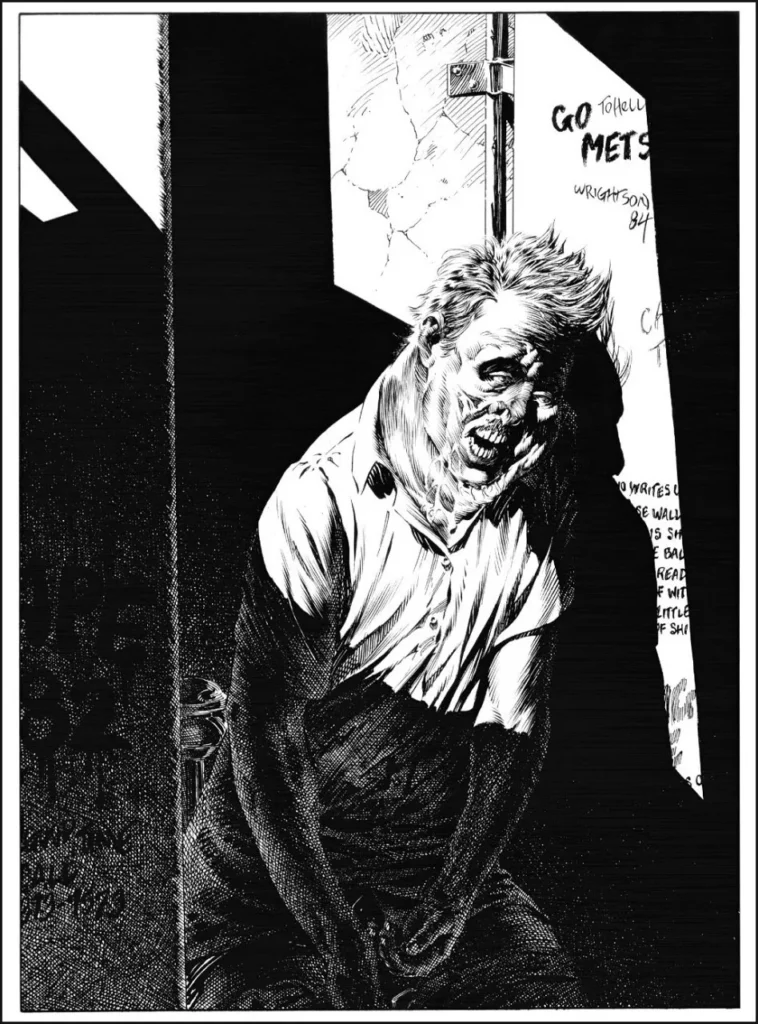
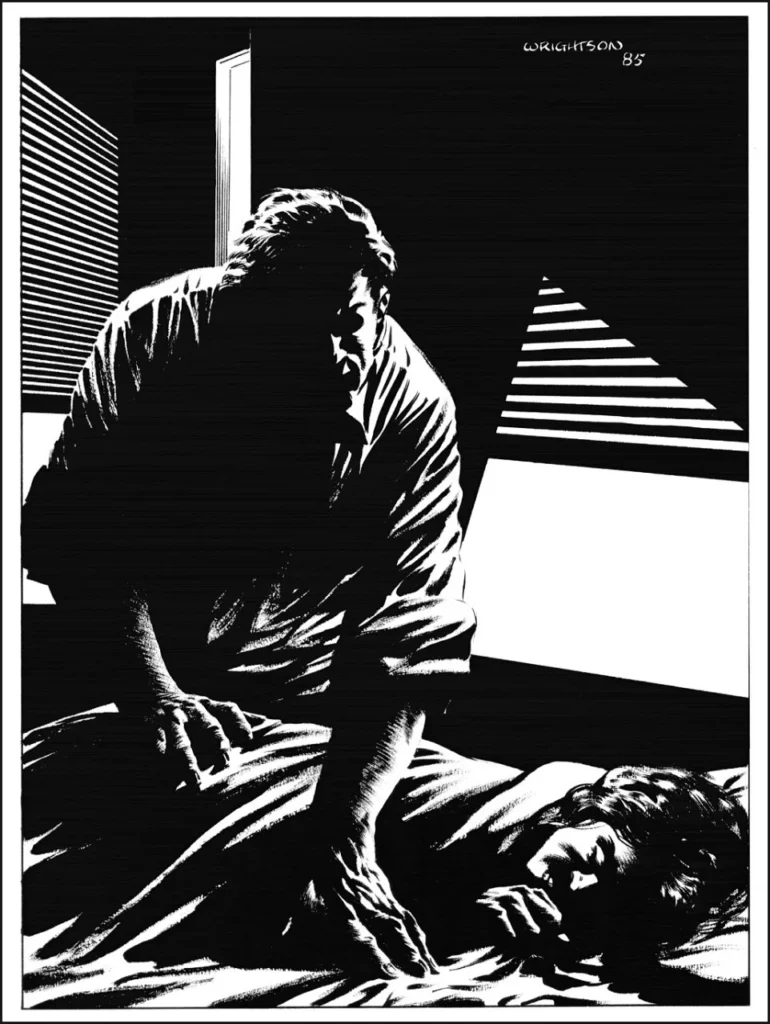
What it’s about
A government lab loses control of a weaponized superflu called Captain Trips, and in a matter of weeks, it kills roughly ninety-nine percent of the human race. King isn’t interested in the epidemiology. The plague is a doorway. The real story begins in the silence afterward, on the empty highways and in the stalled cars, among the handful of people who turn out to be immune.
Then the survivors start to dream, and the dreams pull them in two directions. One is Mother Abagail, a 108-year-old woman in Nebraska who seems to speak for God and gathers her people in Boulder, Colorado. The other is Randall Flagg, the Walkin’ Dude, who gathers the cruel and the frightened in Las Vegas. The book sets up a war between them, and then spends its real energy complicating it.
Abagail is proud and afraid. Flagg is charming and, in his way, reasonable. The Boulder Free Zone rebuilds democracy and immediately reinvents bureaucracy, paranoia, and politics. The fight that matters plays out inside each survivor, in the choices they make when nothing is watching, not in the war between the two cities.
“Show me a man or a woman alone and I’ll show you a saint. Give me two and they’ll fall in love. Give me three and they’ll invent the charming thing we call ‘society’. Give me four and they’ll build a pyramid. Give me five and they’ll make one an outcast. Give me six and they’ll reinvent prejudice. Give me seven and in seven years they’ll reinvent warfare. Man may have been made in the image of God, but human society was made in the image of His opposite number, and is always trying to get back home.”


The government is the disaster
The end of the world here is a man-made disaster, not an act of God or nature. Captain Trips comes out of a military program, and the machinery that built it is the same machinery that fails to contain it and then lies about it.
“That wasn’t any act of God. That was an act of pure human fuckery.”
King wrote The Stand in the shadow of Vietnam and Watergate, into a country that had stopped trusting its institutions, and he’s blunt about his own view. He’s said more than once that too much government, like too much dope or booze, will eventually kill you. The novel takes that suspicion and runs it to its end. The idea had a real seed, too: the 1968 Dugway incident in Utah, where an open-air nerve-agent test killed thousands of sheep, the kind of accident that makes a government-made plague feel less like fantasy than forecast.
The people are the point
What makes The Stand last is the characters, written at the absolute height of King’s powers, more than the plague or the cosmic war. King builds them, memory by memory, until each character we meet walks off the page.
- Stu Redman is the quiet, steady Texan who never asks to lead and ends up leading anyway.
- Frannie Goldsmith, pregnant and grieving, is far tougher than the “flaky girl” some readers write her off as, a survivor of quiet domestic damage long before the flu.
- Nick Andros, deaf and mute, reads people more clearly than anyone in the book and dies offscreen, robbed of the heroic exit the story seems to promise him.
- Tom Cullen, cognitively disabled and pure of heart, turns out to be the most genuinely good person in a book crowded with prophets and monsters, the one who walks into Vegas and walks a broken Stu back out.
The fallen are just as carefully drawn.
- Larry Underwood, a one-hit musician and small-time narcissist, gets the book’s richest arc: he doesn’t start good, he has to become good, slowly and painfully, until he can walk into Las Vegas knowing it will kill him.
- Harold Lauder is more disturbing, a bullied, sharp outcast whose grievance curdles into something we now recognize too well, a case study in radicalization written decades before the word was common.
- Nadine Cross is a tragedy, a woman promised to Flagg since childhood who never gets to be a person.
- Lloyd Henreid is the banality of evil in a cheap suit, a man who follows Flagg not out of malice but because Flagg fed him when he was starving, keeping the crucifixions on schedule because someone handed him the keys.
But what keeps things interesting is that the “good guys” aren’t infallible. Moreover, the “bad guys” aren’t entirely evil. You can see their decisions playing out, and you get the sense that they’re second-guessing if they’re making the right move.
“No one can tell what goes on in between the person you were and the person you become. No one can chart that blue and lonely section of hell. There are no maps of the change. You just come out the other side.”


Randall Flagg
And then there’s Flagg, in his full-scale debut. The worst part, but also the best part about the writing, is that Flagg isn’t a mustache-twirling supervillain. He’s arguably worse because he’s appealing to so many people. He doesn’t force others to do evil; he frees them to do what they already secretly wanted and sells obedience back to them as empowerment.
“He smiles a lot. But I think there might be worms inside him making him smile.”
His Las Vegas is clean, orderly, and terrifying precisely because it works, a theocracy of fear with the lights on, not the pit of chaos you would expect. King never fully explains him, and that’s part of why he is so interesting and memorable.
Flagg is charismatic authoritarianism in denim and cowboy boots, and he doesn’t die at the end so much as move on, ready to start again wherever people are scared enough to trade freedom for certainty. He’d go on to haunt The Eyes of the Dragon and the Dark Tower books, but this is where he arrives in full denim glory!
The long middle and the Hand of God
The book isn’t flawless, and the flaws are worth naming. The first third, the collapse under Captain Trips, is one of the great extended openings in genre fiction. The “no great loss” chapter might just be my favorite chapter ever.
Then the Boulder chapters slow it down to committee meetings, bylaws, and power-grid logistics, and the apocalypse briefly becomes a city-council drama. I think that’s deliberate. King wants you to feel how tedious and fragile rebuilding actually is. Evil is quick and exciting; goodness requires paperwork.
“The beauty of religious mania is that it has the power to explain everything. Once God (or Satan) is accepted as the first cause of everything which happens in the mortal world, nothing is left to chance…logic can be happily tossed out the window.”
Then there’s the ending, which divides people. The heroes reach Las Vegas not as commandos but as witnesses, ready to die, and the story resolves not through their action but through a literal Hand of God that detonates a nuclear warhead and wipes Flagg’s regime off the map.
Read one way, that’s a deus ex machina, the gods stepping in to do what the characters couldn’t. Read another way, and it’s the honest end of a book that’s been about faith and prophecy since page one. I lean toward the second.
“Even the company of the mad was better than the company of the dead.”
The point was never that the heroes would win a fight. It was their surrender and willingness to bear witness that opened the door for grace. And King denies you the victory lap. The novel closes on Stu and Frannie with their newborn, asking whether people ever actually learn. King doesn’t answer.
Which version, and where it sits
A quick practical note. Doubleday made King cut around 400 pages from the 1978 original for cost reasons. In 1990, he restored most of it as The Stand: The Complete & Uncut Edition, updated the timeline, and that’s the brick most people own and the one worth reading. In the run of early King, after Carrie, ‘Salem’s Lot, The Shining, and the Bachman experiment of Rage, this is the one where his ambition finally matches his reach.


Final thoughts
The Stand was my first Stephen King novel, back in 2004 or 2005, and it’s a big part of why I started reading seriously again. It’s long, it wanders, and the ending won’t satisfy everyone. It’s also stayed with me longer than almost anything else I’ve read.
The characters aren’t pieces in a plot; they’re people I traveled with. And while the apocalypse is cool and certainly entertaining, the real subject of the book is in the aftermath and the slow, unglamorous work of choosing to rebuild something good when it would be so much easier to follow the man with the keys.
If you’ve got the time and the patience for it, it gives back everything you put in.
Have you read it? Tell me what landed and what didn’t in the comments.
“A person can’t change all at once.”
Read The Stand yourself
Mysterious Galaxies is a Libro.fm and Bookshop.org affiliate. If you buy the audiobook or physical/digital book through the links below, the channel earns a small commission at no extra cost to you.


Where does The Stand land among King’s 1970s books? I ranked all eight of them, worst to best, in Every Stephen King Book of the 1970s, Ranked (it took the top spot as my favorite).
FAQs
Is The Stand a difficult read?
The Stand isn’t difficult in terms of complex vocabulary or dense prose, but it is a massive commitment. The biggest challenge is its sheer length; the unabridged version runs over 1,100 pages. The story is highly engaging, but it asks for patience and a real time investment.
Is The Stand a slow read?
In stretches, yes. The opening third, the world collapsing under Captain Trips, moves fast and grips hard. The middle, once the survivors reach the Boulder Free Zone, slows to town meetings, committees, and logistics, and that’s where some readers stall. It’s a deliberate choice by King, showing how tedious and fragile rebuilding is, but it does make the pacing uneven before the book builds toward its ending.
Should I read The Stand or It first?
I’d read The Stand first. It’s the earlier novel, and seeing where King’s writing was here makes It land even harder when you get to it, because you can feel what came before. The Stand might be his strongest writing, though It is a favorite of mine too. Either way, The Stand makes a great on-ramp into King.
What is Stephen King’s longest book?
Stephen King’s longest single novel is The Stand: The Complete & Uncut Edition, the 1990 version that restored the cuts from the 1978 original. It runs about 1,150 pages and close to half a million words. His It (1986) is a close second at roughly 1,138 pages.
Sources
- Wikipedia, “The Stand” (publication history, the 1990 Complete & Uncut edition, plot, and Randall Flagg’s later appearances)
- StephenKing.com, “The Stand” (the author’s own page for the novel)
- Wikipedia, “Dugway sheep incident” (the 1968 Utah nerve-agent test that echoes the novel’s origin)
- A Casebook on The Stand – Magistrale
- Bare Bones: Conversations on Terror with Stephen King – King & Underwood
SOURCE · Stephen King, The Stand (1978; Complete & Uncut 1990). SERIES · Into the King-Verse.
Transmissions from ground control