▸ The debut that turned the victim into the monster
Carrie: Stephen King’s Debut and the Making of a Monster
| SUBJECT | Stephen King |
| PUBLISHED | CARRIE (1974) |
| RUNTIME | 19:07 |
| STATUS | INCIDENT REPORT OPEN |
Carrie turned fifty in 2024. Stephen King‘s first published novel arrived in the spring of 1974, and it did two things at once. It launched the most durable career in American popular fiction, and it put a bullied teenage girl at the center of a horror story and dared you to take her side.
I came to it late, and for a bad reason. I’d seen Brian De Palma’s 1976 film with Sissy Spacek, and I told myself the movie had handed me the book. The plot is close enough. But the novel is a different animal, colder and stranger and more upsetting, and reading it made me wish I hadn’t waited.
One warning before we go on. I talk about the ending, including the prom and what follows. If you’d rather stay unspoiled, this is a good place to step off and come back once you’ve read it.

What it’s about
The story is lean. Carrie White is a shy, friendless girl raised by Margaret, a mother whose religion runs on fear and punishment. Carrie is tormented at school and controlled at home, and she can move objects with her mind, a power that grows as her humiliation does. It ends at the prom, where a cruel prank with a bucket of pig’s blood breaks something loose. The school and town burn as a result. What looks like revenge is really a lifetime of pressure finding its one available exit.
“This is the girl they keep calling a monster. I want you to keep that firmly in mind. The girl who could be satisfied with a hamburger and a dime root beer after her only school dance so her momma wouldn’t be worried“


The cruelty that hasn’t aged
The part of Carrie that feels current is the bullying. King wrote her torment in 1974, before anyone carried the school hallway home in their pocket. Read it now, and the gap is loud: a Carrie today would be followed onto her phone, the taunting running around the clock with no bell to end it. King based her on two girls he went to school with, one poor and bullied, one raised in a strict religious house, and that grounding is why the cruelty reads like reporting rather than invention.
“People don’t get better, they just get smarter. When you get smarter you don’t stop pulling the wings off flies, you just think of better reasons for doing it.“


Victim and monster
King’s hardest trick is making you root for someone who becomes a mass murderer. Carrie is failed by the school, by her mother, and by a town that looks away, and the same pages that earn your sympathy end with her killing hundreds of people. He doesn’t resolve that tension for you. He hands you a girl who was let down at every level, shows you the size of what that failure produces, and leaves you sitting with the question of how much of the blame belongs to the people who pushed her there.
That’s the move that lifts Carrie above its premise. The classic monster is born evil. Carrie is built, piece by piece, by everyone around her, which makes her both the thing you fear and the thing you grieve.

Margaret and the machinery of faith
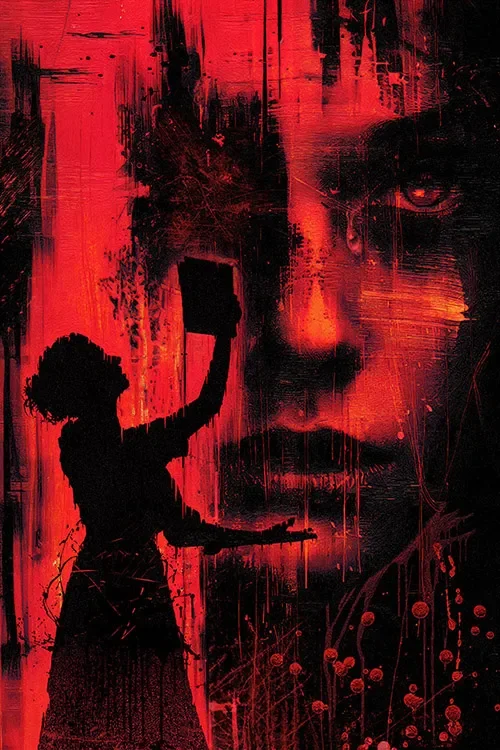
Margaret White is the book’s other horror, and the more human one. Her faith is a machine for control, built from hellfire and shame and aimed at her daughter. She calls Carrie’s body and Carrie’s power sinful, and in trying to beat the sin out of her, she creates the exact catastrophe she claims to fear. King is precise about the irony. The abuse committed in the name of protection is what lights the fuse.
“Jesus watches from the wall,
But his face is cold as stone,
And if he loves me
As she tells me
Why do I feel so all alone?”
A horror story told as a case file
For a first novel, the shape is bold. King tells the story straight, then breaks it open with invented documents: news clippings, a scientific paper, and testimony from the commission that investigates the disaster afterward. The framing turns a supernatural event into evidence, so you read the prom the way you’d read a real tragedy, already knowing the body count and hunting for the cause. He would use the technique again throughout his career (notably in The Dead Zone), and it works here because it makes the horror feel like it’s been investigated rather than imagined.
Why it still works
So is it good? It’s foundational, and it holds up at fifty in a way most debuts don’t. It’s also visibly a first book, rough in spots, a writer still finding the voice he’d spend decades sharpening. That roughness is part of the appeal.
The scope is what surprised me. Where a lot of seventies horror stays inside one haunted house or one possessed child, Carrie explodes outward. A high schooler’s worst night becomes a town-sized disaster, and the private tragedy turns public and enormous. The cost of power is a theme King keeps returning to, from the psychic in The Dead Zone to the girl who starts fires in Firestarter, and it’s at its rawest here. Carrie’s gift is the only thing that ever lets her fight back, and it’s also what destroys her.
“She did not know if her gift came from the lord of light or of darkness, and now, finally finding that she didn’t care which, she wad overcome with almost indescribable relief, as if a huge weight, long carried, had slipped from her shoulders.”
Then there’s the ending, which refuses to comfort you. King offers no hero and no lesson learned. The documents that close the book are full of fear and denial, and people still miss the point, which is how real towns talk after a real catastrophe. He leaves you asking whether anyone learned anything, or whether the next Carrie is already being made somewhere nearby.
Placed in 1974, the book also did something the genre mostly hadn’t. It put a young woman at the center as victim, anti-hero, and possibly villain, all at once. Carrie’s power reads like a crude, furious kind of autonomy, and the terror it inspires is partly the old fear of a woman who can’t be controlled anymore. You can draw a line from her to Laurie Strode in Halloween and to Dani in Midsommar, women the genre trusts to carry their own trauma and their own agency. A lot of that starts with Carrie.

Final thoughts
I put Carrie off for years, and I was wrong to do so. It’s brutal, it’s sad, and it does the hardest thing a horror novel can do: it turns the mirror around. The image that stayed with me was the quiet accusation underneath the pig’s blood. I never bullied anyone at school, but I never stopped it either. I watched it happen and stayed small and quiet, and the book made me feel that old cowardice again, sharp, decades later. Carrie is about the people around her at least as much as it’s about her, and it asks whether you would have been one of them.
Read it. Then tell me how it holds up for you.
Read Carrie yourself
Mysterious Galaxies is a Libro.fm and Bookshop.org affiliate. If you buy the audiobook or physical/digital book through the links below, the channel earns a small commission at no extra cost to you.


Where does Carrie land among King’s 1970s books? I ranked all eight of them, worst to best, in Every Stephen King Book of the 1970s, Ranked (it came in at number six).
FAQs
What is Stephen King’s Carrie about?
Carrie follows Carrie White, a shy high school outcast with telekinetic powers. Bullied at school and raised by an abusive, fanatically religious mother, she’s pushed past her breaking point, and the novel builds to a violent, tragic revenge at the prom. Its real subject is trauma, isolation, and how cruelty compounds.
Was Carrie based on a true story?
Not directly, but King has said he modeled Carrie White on two girls he knew growing up. One lived in poverty and was bullied for it; the other came from a strict religious household. He combined their lives with the idea of telekinesis to build the character.
Why is Carrie so often banned?
Carrie is one of the more frequently challenged books in the United States, cited for its violence, profanity, sexual content, and its treatment of religion. It stays on shelves anyway because the same material makes it a serious book about bullying and abuse.
How is Carrie described in the book?
Unlike the films with Sissy Spacek or Chloë Grace Moretz, the novel describes Carrie as heavy, with pimples and a plain, “frog-like” face. King made her physically unappealing on purpose, to sharpen her status as an outcast and make her transformation land harder.
Why does Carrie turn on the town?
Carrie isn’t written as evil. She’s a victim of sustained abuse and bullying whose telekinesis grows alongside her pain. The pig’s blood prank at the prom is the final humiliation, and her rampage is repressed trauma and uncontrolled power lashing out at a world that tormented her.
How many times was Carrie rejected?
The manuscript was turned down roughly thirty times, and a discouraged King threw an early draft in the trash. His wife, Tabitha, fished it out and pushed him to finish it. The book that followed launched his career.
Sources
- Wikipedia, “Carrie (novel)” (publication, the two real girls, the rejections and Tabitha King, reception)
- StephenKing.com, “Carrie” (the author’s own page for the novel)
- Carnegie Mellon University Libraries, Banned Books: “Carrie” (its history as a challenged and banned title)
- Lividian Publications’ edition of Carrie’s Legacy: Revisiting Stephen King’s Girl with a Frightening Power
SOURCE · Stephen King, Carrie (1974). SERIES · Into the King-Verse.
Transmissions from ground control