▸ The town was already dying
‘Salem’s Lot: Stephen King’s Dracula in Small-Town Maine
| SUBJECT | Stephen King |
| PUBLISHED | 'SALEM'S LOT (1975) |
| RUNTIME | 14:50 |
| STATUS | RESIDENTS UNACCOUNTED FOR |
The plan is to read Stephen King in publication order, which turns out to be a daunting amount of reading. After Carrie comes ‘Salem’s Lot, his second novel, from 1975. If Carrie was the explosion that put King on the map, ‘Salem’s Lot is where he stretches his legs and starts to feel like the writer he’d become.
The pitch is simple: Dracula in small-town America. That combination is the whole trick, and it works.
A note before we go on: I spoil the ending here, including who lives and who doesn’t. If you’d rather come to it fresh, read it first, and then come back.
“But when fall comes, kicking summer out on its treacherous ass as it always does one day sometime after the midpoint of September, it stays awhile like an old friend that you have missed. It settles in the way an old friend will settle into your favorite chair and take out his pipe and light it and then fill the afternoon with stories of places he has been and things he has done since last he saw you.”
What it’s about
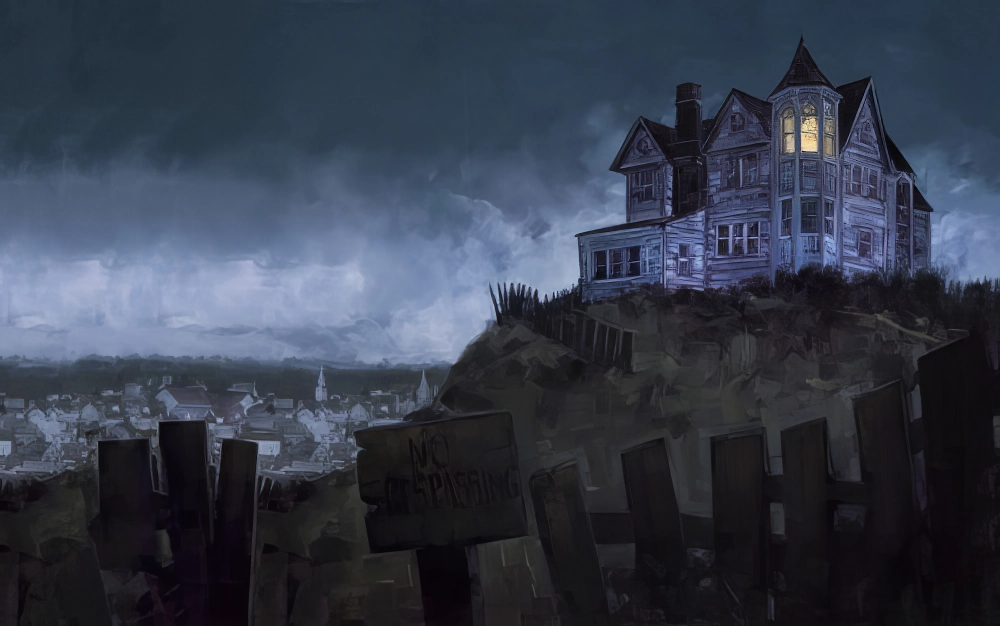
Ben Mears, a writer, comes back to Jerusalem’s Lot, the Maine town everyone calls ‘Salem’s Lot. He’s here to write about the Marsten House, the abandoned place on the hill that frightened him as a boy, and to put some of his own ghosts to rest. The problem is that someone has already moved into the Marsten House. Kurt Barlow is an old-world vampire with no interest in brooding or seduction, just appetite, and with his human servant Richard Straker, he starts quietly turning the town. People go missing. Then they come back. Before long, the Lot belongs to the dead.
Ben pulls together a small band to fight back: young Mark Petrie, who’s every horror-obsessed kid who ever lived, the sharp and skeptical teacher Matt Burke, the tragic Father Callahan, and Susan Norton, Ben’s love interest. Not all of them make it out.
The vampires
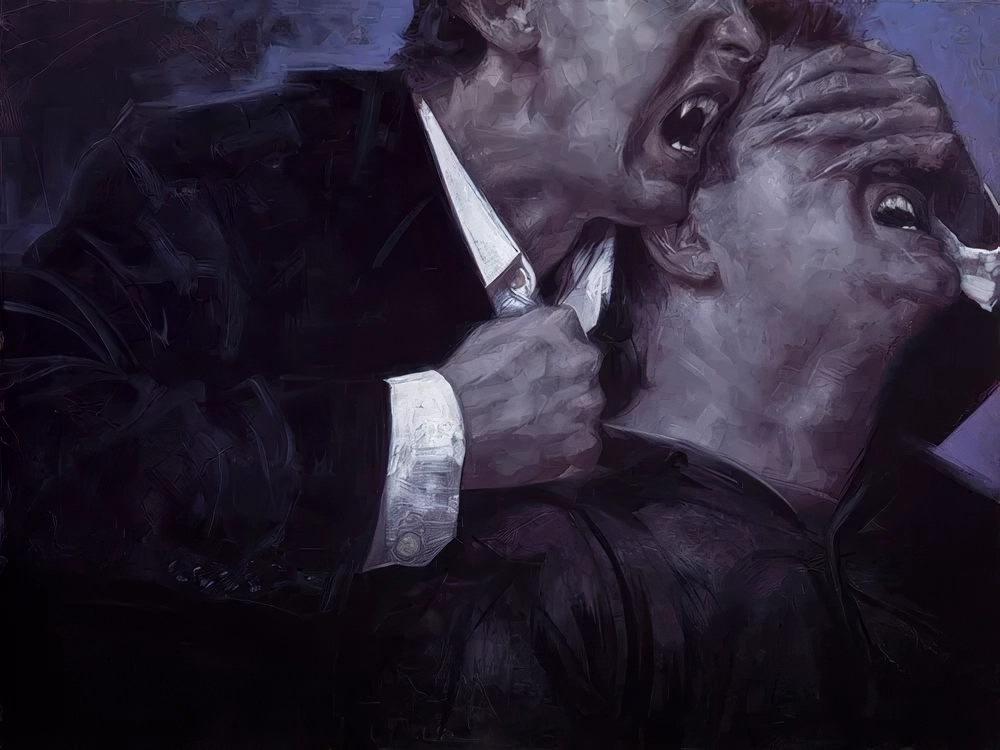
The vampires are terrifying, and that matters because it’s easy to make them anything but. This isn’t Twilight. This isn’t Interview with the Vampire, much as I love that book. There’s no romance and no brooding immortals here. Barlow and his brood are predators, pure hunger, spreading through the town like a disease.
“If a fear cannot be articulated, it can’t be conquered.”
King doesn’t reinvent the mythology either. He perfects it. Stakes through the heart, garlic, holy water, no entry without an invitation, sleeping in coffins through the day. He takes the old rules, the ones that run straight back to Dracula, and drops them into 1975.
What’s new is watching the monsters move through a quiet, ordinary American town that feels completely real. And the real horror is how easily the vampires take the Lot. There’s no grand war or bloodbath, only people vanishing one at a time while their neighbors look for any explanation but the obvious one, until it’s far too late to matter.

The town was already dying
“The town kept its secrets, and the Marsten House brooded over it like a ruined king.”
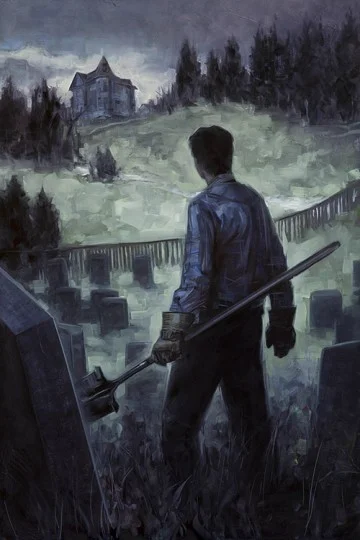
‘Salem’s Lot is more than just a setting. It’s a character in its own right, and this is where King begins to work in the love-hate feeling for small-town America that runs through so much of his later work. The Lot has long memories, buried secrets, and a history it would rather forget. It existed long before Barlow, and in a way, it was already dying. He exposes a town’s deep-seated history and then destroys it.
“God grant me to SERENITY to accept what I cannot change the TENACITY to change what I may and the GOOD LUCK not to fuck up too often”
King plays with the idea that a town holds its sins like heirlooms, handing them down through generations. A place like the Lot doesn’t need a vampire to rot. It was on the way out already, and Barlow just sped it up. The book makes a genuinely bleak argument: maybe some towns deserve to die.
Father Callahan and a faith that fails
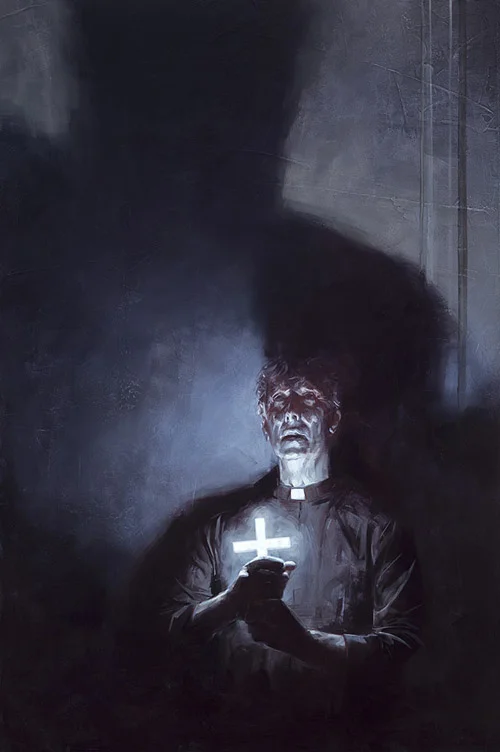
Father Callahan is the character who stayed with me. He’s a priest who wants to fight real, supernatural evil. He’s spent his life believing in capital-E Evil, a darkness in the world worth confronting, and he’s almost eager for the fight. Then Barlow actually arrives, and Callahan’s faith folds. When he faces the thing he always claimed to want, he finds out he was never as strong as he believed.
“The basis of all human fears, he thought. A closed door, slightly ajar.”
The worst moment isn’t that Barlow kills him. Barlow makes him drink his blood, and it doesn’t turn him. It damns him. Callahan goes back to his church, and the door won’t open for him anymore. He’s tainted, cast out, rejected by the very institution he gave his life to, and he leaves the Lot a broken man. It’s one of the most tragic arcs in early King, and it sets up an idea he’d return to for decades: good isn’t always strong enough to win, and sometimes good people lose. Callahan’s story doesn’t end here, either. He turns up again years later in King’s Dark Tower series, which is its own reward once you know where he came from.
Nobody really wins
That’s the shape of the whole book. Ben survives, but he loses Susan. Mark Petrie survives, but his parents are murdered in front of him, and he’s forced to grow up in a night. The town is wiped off the map. Even the wins are hollow. Killing Barlow doesn’t undo anything, and burning the Lot down doesn’t erase what happened there. The horror underneath the vampires is the suspicion that some things are just too big to fight, that the most you can do is run and hope you can live with it after.
The book where King becomes King
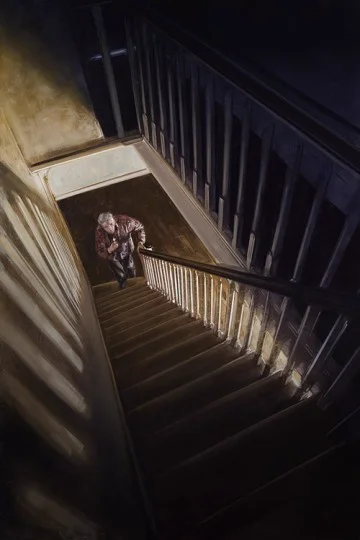
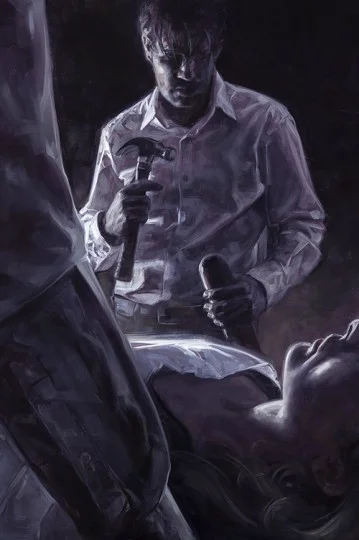
Read a lot of King, and ‘Salem’s Lot starts to feel like a blueprint. The tongue-twister Mark Petrie repeats to hold off Danny Glick, “he thrusts his fists against the posts and still insists he sees the ghosts,” comes back in It when Bill Denbrough uses it against Pennywise. The Marsten House looms over the Lot the way the Overlook Hotel looms over The Shining. The writer protagonist, the haunted town, the fight between good and evil, the creeping dread that hardens into terror, they all start taking shape here.
It’s also the first King novel with a writer at the center, and Ben Mears is the prototype for a lot that follows. Unlike Jack Torrance or Paul Sheldon in Misery, Ben doesn’t let the work wall him off from the world. He comes back to the Lot to understand his past, not to hide from it, and King being King, there’s no clean revelation waiting. Ben doesn’t conquer his childhood fear of the Marsten House. He just survives it, which in a King novel is about the best on offer.
Why you should read it
The scares here aren’t blood and gore. They’re quiet, psychological, and worst of all, inevitable. Danny Glick floating outside Mark Petrie’s second-story window, scratching at the glass and whispering to be let in, is one of the most iconic images in horror for a reason. Every kid has looked out a dark window, feeling like something was just past the edge of sight. In this book, there really is, and it wants in. Danny’s funeral is King’s first serious run at grief, the child-sized loss that Pet Sematary would later make a whole novel of, and it lands hard.
There’s a real idea beneath the fear, too: that childhood terrors never actually leave; they just get buried as you grow up. As kids, we believe in the thing under the bed, and the way we survive is to stop believing. Mark Petrie survives precisely because he doesn’t. He believes first. When Danny is at the window, he doesn’t try to explain it away; he acts, and the book quietly argues that belief itself is a weapon.
Final thoughts
I hadn’t read ‘Salem’s Lot before this, and it turned into one of my favorites, maybe my third behind The Stand and The Shining. It’s comfort food for horror fans, the kind of book you settle into like a worn sweater, enjoy the slow build, and get wrecked by in the last stretch. If Dracula is the grandfather of vampire fiction, King is the relative who barged in, wrecked the place, and hauled the genre into the modern world. Read it. Then tell me where it lands for you.
“Only library books speak with such wordless eloquence of the power good stories hold over us.”
Read ‘Salem’s Lot yourself
Mysterious Galaxies is a Libro.fm and Bookshop.org affiliate. If you buy the audiobook or physical/digital book through the links below, the channel earns a small commission at no extra cost to you.


Where does ‘Salem’s Lot land among King’s 1970s books? I ranked all eight of them, worst to best, in Every Stephen King Book of the 1970s, Ranked (it took the number three spot).
FAQs
What is Stephen King’s book ‘Salem’s Lot about?
‘Salem’s Lot tells the story of Ben Mears, a writer returning to his childhood home in Jerusalem’s Lot, Maine. He discovers the town is slowly being infested by vampires led by the ancient Kurt Barlow. It is a modern retelling of Dracula set in a small, dying American town.
Is ‘Salem’s Lot based on a true story?
While fictional, King was inspired by Dracula and a legend he heard about a Vermont ghost town named “Jeremiah’s Lot” that was allegedly abandoned by its residents overnight. He combined these elements with the geography of his own childhood in Maine to create the grounded, realistic setting.
Why is ‘Salem’s Lot banned in some schools?
The novel has faced bans and challenges due to its graphic violence, extensive profanity, and sexual content. Critics also frequently cite the “negative depiction of religion,” specifically regarding Father Callahan’s loss of faith and the desecration of holy symbols, as reasons for its removal from libraries.
What is the difference between the ‘Salem’s Lot book and the movies?
The biggest difference lies in the fate of Father Callahan; in the book, he survives but is “damned” to wander, while in most adaptations, he is killed. The book also features a much darker, ambiguous ending for the survivors, whereas the films often streamline the conclusion for cinematic closure.
Is Father Callahan in other Stephen King books?
Yes, Father Donald Callahan is a major character in King’s The Dark Tower series. After fleeing ‘Salem’s Lot, he reappears in Wolves of the Calla, where his story continues. He eventually finds redemption fighting alongside Roland Deschain, making him one of the most significant crossover characters in the King multiverse.
What is the scariest scene in ‘Salem’s Lot?
While subjective, the most iconic and terrifying scene for many readers is when the vampire child, Danny Glick, floats outside Mark Petrie’s second-story window, scratching on the glass to be let in. This chilling inversion of safety in one’s own bedroom has become a staple of horror imagery.
Sources
- Wikipedia, “‘Salem’s Lot” (publication, the Dracula and Jerusalem’s Lot inspiration, plot, Father Callahan)
- StephenKing.com, “‘Salem’s Lot” (the author’s own page for the novel)
- Wikipedia, “Father Callahan” (the character’s crossover into The Dark Tower)
- Cemetery Dance (the ‘Salem’s Lot edition that I have on my shelves)
SOURCE · Stephen King, 'Salem's Lot (1975). SERIES · Into the King-Verse.
Transmissions from ground control