▸ A man wakes from a coma able to see what's coming
The Dead Zone: Stephen King’s First Political Novel and the Hitler Question
| SUBJECT | Stephen King |
| PUBLISHED | THE DEAD ZONE (PUBLISHED 1979) |
| RUNTIME | 29:34 |
| STATUS | FUTURE INTERCEPTED |
If you could go back to 1932 and kill Hitler before he took power, would you do it? It’s an easy yes when it stays a thought experiment. Stephen King’s The Dead Zone, published in 1979, takes that question and hands it to an ordinary schoolteacher who can actually see the future, and then watches him try to live with the answer. It was King’s first openly political novel, and it’s less a horror story than a tragedy about the weight of knowing something before anyone will believe you.
A note before we go on: I discuss the whole book, including the ending. If you’d rather stay unspoiled, go read it, and then come back.
“Some things were better lost than found.”
What it’s about
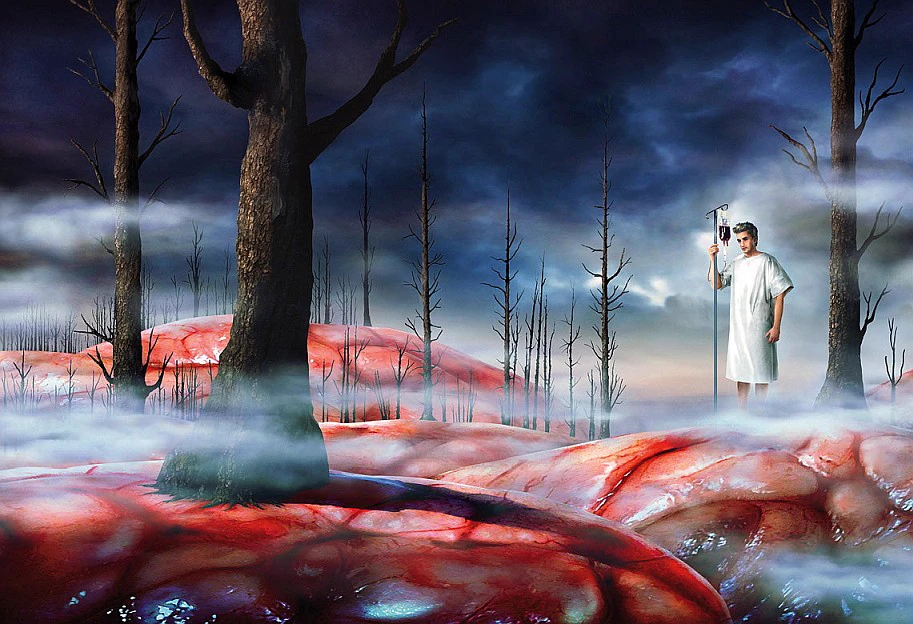
Johnny Smith is the most ordinary man King could invent, right down to the name. He teaches high school English in small-town Maine, he’s in love with a woman named Sarah, and he’s thinking about marriage. Then, driving home from a date in 1970, his cab is hit head-on by a pair of drag racers, and Johnny goes into a coma. He stays there four and a half years. When he wakes in 1975, Nixon has come and gone, Vietnam has ended, Sarah is married with a child, and Johnny’s twenties are simply gone.
He wakes with something in exchange. When Johnny touches a person, or an object they’ve handled, he sees things: their past, and sometimes their future. Not everything, and not clearly. There are gaps, blind spots the doctors call “the dead zone” in his damaged brain. But he sees enough, and the seeing is the curse. Every handshake becomes a chance to learn something about a stranger that no one should have to carry.
The title does four things at once
The dead zone is the literal damaged patch of Johnny’s brain, the thing that both grants his visions and limits them. It’s also the four and a half missing years, the hole in his own life he can never fill, and the way he becomes a kind of ghost in everyone else’s, the man whose return only reminds them of what they lost. And it’s a philosophical idea. Johnny’s visions show what will happen if nothing changes, but things can change.
The dead zone is the gap between the future he sees and the future that actually arrives, the space where a choice can still be made. He warns a nurse and her house doesn’t burn. He acts, and the vision ceases to be true. King builds one of his best novels out of that one uncertainty.

Two men, and the choice between them
The book moves outward in widening circles. First, the personal, the nurse, and the fire. Then the criminal: the town of Castle Rock is being terrorized by a killer the papers call the Castle Rock Strangler, and the sheriff, out of options, asks Johnny for help. Johnny touches the scene and sees the killer’s face. It’s Frank Dodd, the sheriff’s own deputy, a man everyone trusts. Cornered, Dodd cuts his own throat before he can be arrested, and Johnny is left wondering whether he saw the suicide coming or caused it.
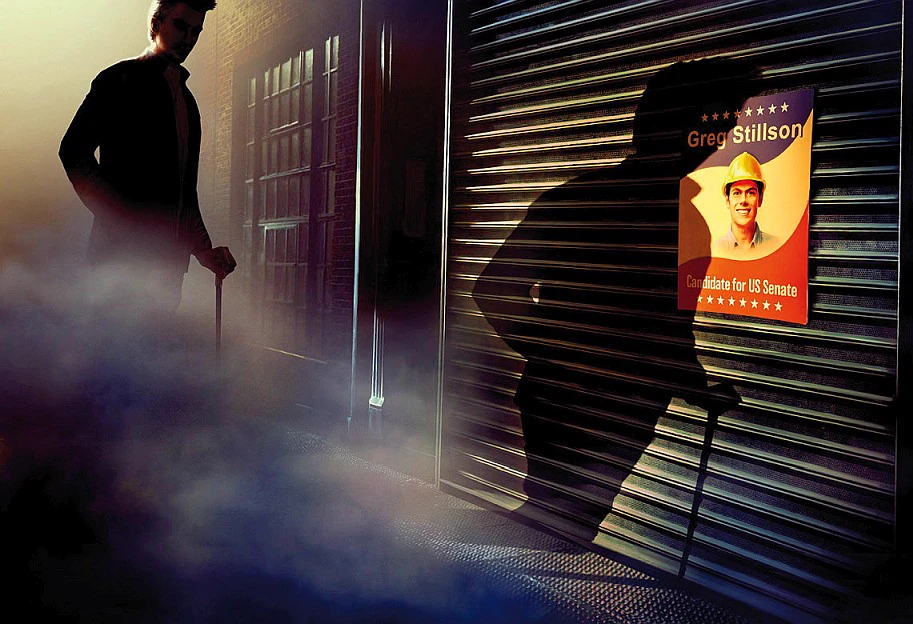
Then the political. At a 1976 rally, Johnny shakes hands with a congressional candidate named Greg Stillson, and it’s the strongest vision of his life. He sees Stillson in the Oval Office, unhinged, screaming at his generals, ordering a nuclear first strike. He sees the missiles leave their silos. He sees the end of everything. And Johnny understands that he is the only person alive who knows what this smiling, folksy man is going to become.
Stillson is one of King’s great villains precisely because there’s nothing supernatural about him. He’s a recognizable American type. King introduces him kicking a barking dog to death on a stranger’s lawn, then turning to the door with a salesman’s grin, and that’s the whole man: casual cruelty behind performed authenticity.
He wears a hard hat with his name on it, talks like he’s just one of you, tells the crowd the system is rigged and the elites don’t care, and everything wrong with your life is someone else’s fault. The rallies are electric. Nobody in them is thinking. And King’s warning is really about the people who show up for Stillson and choose not to see what he is.
The Hitler question, made real
Here’s where the thought experiment stops being comfortable. Johnny isn’t traveling back to shoot a historical Hitler whose crimes are already in the books. He’s looking at a living congressman who, right now, has murdered no one. Crude, cruel, ambitious, but not yet a mass murderer. Johnny wants to kill a man for crimes that exist only in a vision, crimes that haven’t happened and, if the future can really be changed, might never happen at all. That’s the crux of the issue. If the future is fixed, the vision is useless. If it isn’t fixed, then killing Stillson means killing a man for something he may never do.
King wrote this in 1979, but the question has only gotten sharper, because we’ve spent the years since building machinery that runs on exactly this logic. Governments carry out targeted killings against people judged to be future threats rather than present ones. Police departments buy predictive systems and layer drones and cameras over whole neighborhoods to get ahead of crimes not yet committed.
Britain has piloted a tool meant to flag the people most likely to kill. In the United States, the label “pre-crime” has drifted from science fiction into live political rhetoric and is now attached to entire ideologies.
We keep answering Johnny’s question with infrastructure. The Dead Zone asks the part we skip: who decides what counts as a certain-enough threat, and what happens when they’re wrong?
How it ends
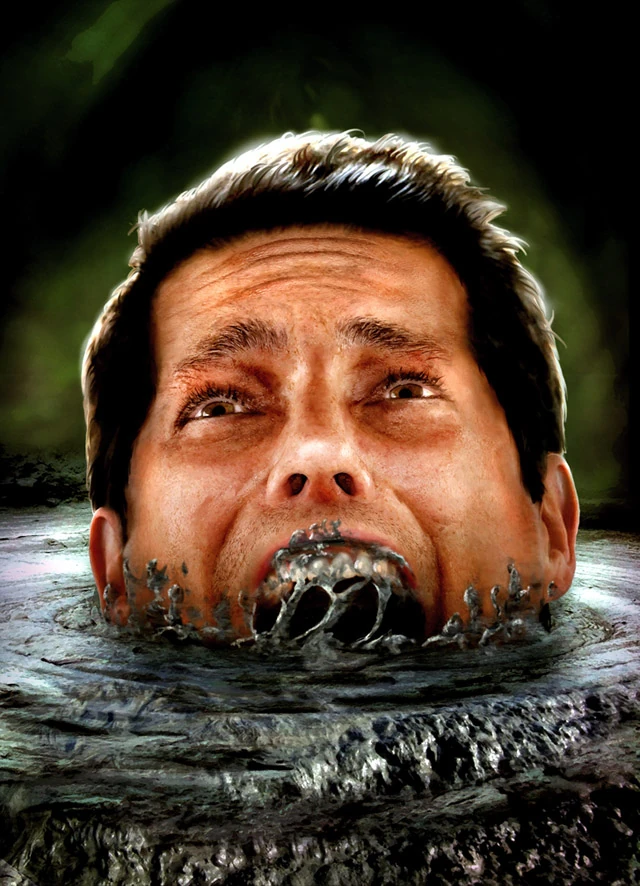
Johnny’s brain tumor is growing; the same injury that gave him the visions is going to kill him, and that deadline makes up his mind. He buys a rifle, practices, tracks Stillson’s schedule, and, at a rally, takes his shot. He misses. Security spots him, he’s hit, and as he lies bleeding, Stillson does the thing that saves the world without Johnny having to pull the trigger again: faced with real danger, he snatches a small child from the crowd and holds the boy up in front of him as a shield. A photographer catches all of it.
The photo is what finishes Stillson. The tough-talking strongman hiding behind a toddler runs everywhere, and it’s too damning to survive. His career collapses, he never reaches the White House, and the future Johnny saw quietly stops being the future.
Johnny dies of his wounds, and in his last moments, he touches Stillson’s world one more time and feels the shadow lifting. He succeeded. But nobody knows it. There’s no statue or record of what he prevented. To the world, he’s just a disturbed man who shot at a politician and missed. Only Sarah understands, and only she, and us, ever will. King’s argument is that heroism is often exactly this quiet, and this unrewarded: total sacrifice for people who will never learn your name.


Final thoughts
Every generation gets its Greg Stillson, and every generation gets Johnny’s problem along with him: we can often see the catastrophe coming and can’t agree on what we’re allowed to do about it. King doesn’t hand you the answer. He won’t tell you whether preemptive action is ever justified or whether you have to wait for the crime. What he does instead is make you feel the weight of knowing, the loneliness of carrying a warning nobody else believes, and he leaves you there.
Read The Dead Zone alongside the rest of the early run, Carrie, ‘Salem’s Lot, The Shining, the buried Rage, the stories in Night Shift, The Stand, and The Long Walk, and you can watch King reach for something the horror label kept obscuring: not a monster, but the ordinary human machinery that lets a monster take power.
Have you read it? Tell me what landed and what didn’t in the comments.
“We all do what we can, and it has to be good enough, and if it isn’t good enough, it has to do.”
Read The Dead Zone yourself
Mysterious Galaxies is a Libro.fm and Bookshop.org affiliate. If you buy the audiobook or physical book through the links below, the channel earns a small commission at no extra cost to you.


Where does The Dead Zone land among King’s 1970s books? I ranked all eight of them, worst to best, in Every Stephen King Book of the 1970s, Ranked (it landed at number four).
FAQs
What is The Dead Zone about?
The Dead Zone follows Johnny Smith, an ordinary Maine schoolteacher who spends four and a half years in a coma after a car accident and wakes with the ability to see people’s pasts and futures when he touches them. He uses the gift to warn people and to help catch a serial killer, but the story turns when he shakes hands with a rising politician named Greg Stillson and sees a vision of Stillson becoming president and launching a nuclear war. The rest of the novel is Johnny’s struggle with an impossible question: whether he should kill a man for crimes he has only foreseen. Published in 1979, it was Stephen King’s first openly political novel.
What does “the dead zone” mean in the novel?
On the literal level, the dead zone is the patch of Johnny’s brain damaged in the crash. It’s what gives him his visions and also what limits them, leaving blind spots where his sight cuts out. King builds the phrase into a metaphor as well: it’s the missing years Johnny lost to the coma, the way he becomes a kind of absence in the lives of people who moved on without him, and, most importantly, the gap between the future Johnny sees and the future that actually happens. That gap is the space where choice still operates, where a foreseen event can be changed. The title works on all of these levels at once.
What powers does Johnny Smith have?
Johnny has a form of psychic ability closest to psychometry: when he touches a person, or an object that person has handled, he can perceive things about them, including events in their past and glimpses of their future. His visions are involuntary and incomplete, full of gaps he calls the dead zone. Crucially, what he sees is not fixed. His visions show what will happen if nothing changes, which means acting on them can alter the outcome, as when he warns a nurse and prevents her house from burning down.
Who is Greg Stillson?
Greg Stillson is the novel’s antagonist, a charismatic populist politician who rises from door-to-door Bible salesman to small-town mayor to candidate for Congress. King introduces him kicking a dog to death and then smiling for a sale, establishing him as a man who hides casual cruelty behind performed authenticity. He wears a hard hat, talks like an outsider, and works crowds into a frenzy by telling them the system is rigged and their problems are someone else’s fault. When Johnny shakes his hand, he sees Stillson reaching the presidency and triggering a nuclear war, which sets the novel’s central crisis in motion.
Who is Frank Dodd in The Dead Zone?
Frank Dodd is a sheriff’s deputy in Castle Rock, Maine, and secretly the serial killer the town knows as the Castle Rock Strangler. When the sheriff asks Johnny to help with the unsolved case, Johnny touches a crime scene and sees Dodd’s face, exposing a man everyone had trusted. Cornered, Dodd takes his own life before he can be arrested. Dodd and Castle Rock recur across Stephen King’s work, which links The Dead Zone to the larger web of his Castle Rock stories.
Why does Johnny try to kill Greg Stillson?
After his vision of President Stillson ordering a nuclear first strike, Johnny becomes convinced that Stillson will end the world if he ever reaches power, and that Johnny is the only person who knows. Learning that his brain tumor is growing and that he is dying gives him a deadline and, in his mind, a reason: he decides to trade what’s left of his life to stop a catastrophe only he can see. It’s the Hitler question made literal, the choice to kill a man for terrible crimes he has not yet committed.
How does The Dead Zone end?
Johnny attempts to assassinate Stillson at a political rally and misses. As security shoots him, Stillson panics and grabs a small child from the crowd, holding the boy up as a human shield, and a photographer captures the moment. That photograph destroys Stillson: the image of the tough-talking populist hiding behind a toddler ends his career and keeps him out of the White House, so the future Johnny saw never comes to pass. Johnny dies of his wounds, having changed the future without firing a fatal shot. The world never learns what he prevented; only his old love Sarah understands what he did and why.
Is The Dead Zone connected to other Stephen King books?
Yes. The Dead Zone is set partly in Castle Rock, Maine, the fictional town that becomes a hub of King’s interconnected universe. The killer Frank Dodd and Sheriff George Bannerman both reappear or are referenced in later Castle Rock stories, most notably Cujo. Reading The Dead Zone alongside King’s late-1970s run shows him building the shared geography and recurring figures that tie much of his work together.
How long was Johnny Smith in a coma?
Johnny is in a coma for four and a half years, from a 1970 car accident until he wakes in 1975. King uses the gap to displace him in time: while Johnny was unconscious the world moved on without him, Nixon resigned, the Vietnam War ended, and the woman he loved married someone else. Waking to that lost stretch of his own life is one of the meanings folded into the novel’s title.
Is The Dead Zone a political novel?
Very much so. It was King’s first openly political book, written in the anxious aftermath of Watergate, Vietnam, and the Three Mile Island accident, and in the middle of the Cold War’s nuclear dread. Through Greg Stillson, King examines how a charismatic demagogue gains power by weaponizing resentment and performed authenticity, and how democracies stay vulnerable to that appeal. The novel’s central dilemma, whether it can ever be right to stop a dangerous figure before he acts, still maps onto present-day debates about predictive policing, surveillance, targeted killing, and the language of “pre-crime.”
Why was The Dead Zone banned?
The Dead Zone has turned up on banned and challenged book lists in American schools since the 1980s, and it ranked among the 100 most frequently challenged books of the 1990s, alongside other King titles like Cujo and Carrie. The objections were the ones commonly aimed at King in that era: violence, profanity, sexual content, and questions of whether the book was age-appropriate for younger readers. What’s striking is that the challenges rarely targeted the novel’s political argument. The premise itself unsettled some censors more directly, a sympathetic hero who decides that assassinating a future tyrant might be the right thing to do.
Is The Dead Zone a true story?
No. The Dead Zone is fiction. Johnny Smith, his visions, Greg Stillson, and the town of Castle Rock are all invented. What grounds the book is a real question and a real mood rather than real events: the “would you kill Hitler” thought experiment, and the anxieties of 1979, late Cold War nuclear fear, post-Watergate distrust of leaders, and the Three Mile Island accident that spring. King uses a fantastic premise to make those pressures concrete, but none of it happened.
Did Stephen King like The Dead Zone?
King has never publicly named it his single favorite, so any quote claiming so should be treated with suspicion. What’s on the record says plenty on its own: it was his first novel to become a hardcover bestseller, a deliberate move away from the “horror writer” label toward a straight political thriller, and he dedicated it to his son Owen. Critics and longtime readers routinely place it among his most accomplished and least formulaic books, the tragic, character-driven novel where King showed he could work without a monster.
How old was Christopher Walken when he did The Dead Zone?
Christopher Walken was born on March 31, 1943, and David Cronenberg’s film adaptation began shooting in early January 1983, which made Walken 39 when production started. He turned 40 while the film was being made, and by the time The Dead Zone reached US theaters on October 21, 1983, he was 40.
Where was The Dead Zone with Christopher Walken filmed?
Cronenberg shot the 1983 film in his native Ontario, Canada, rather than in the novel’s Maine setting, working across the Greater Toronto Area and the Niagara region in early 1983. Locations included Niagara-on-the-Lake, the Screaming Tunnel near Niagara Falls, the town of Stouffville, and Canada’s Wonderland theme park in Vaughan, whose roller coaster appears in the film.
Sources
- Wikipedia, “The Dead Zone (novel)” (publication date, plot, Johnny Smith’s coma and abilities, Greg Stillson and the ending, and the novel’s ban and challenge history)
- Stephen King Wiki, “The Dead Zone” (character details for Johnny Smith, Sarah, Frank Dodd, and Sheriff Bannerman, and the Castle Rock connections)
- Wikipedia, “The Dead Zone (film)” (the 1983 Cronenberg adaptation: January 1983 Ontario shoot and locations, the October 21, 1983 release, and Christopher Walken as Johnny Smith)
- Military Strategy Magazine, “Is There a Future for Targeted Killing?” (states acting against people judged to be future threats)
- The Guardian, “UK creating prediction tool to identify people most likely to kill” (2025) (predictive tools that flag potential future offenders)
- Jacobin, “Trump Classifies Anti-Capitalism as a Political Pre-Crime” (2025) (the language of “pre-crime” entering political rhetoric)
- Hartford Courant, “Hartford to use drones, additional cameras in crime-fighting effort” (2017) (drones and camera surveillance deployed to get ahead of crime)
- The New York Times, “Trump and Violence” (video) (a real-world demagogue’s rally rhetoric, for the Stillson archetype)
SOURCE · Stephen King, The Dead Zone (published 1979). SERIES · Into the King-Verse.
Transmissions from ground control