▸ The alien that notices you, and won't let you see the truth
Beyond the Aquila Rift by Alastair Reynolds: The Most Frightening Alien Is the One That Cares
| SUBJECT | Alastair Reynolds |
| PUBLISHED | "BEYOND THE AQUILA RIFT" (PUBLISHED 2005) |
| RUNTIME | 31:30 |
| STATUS | ROUTING ERROR · 150,000 LY |
Science fiction has spent a long time teaching us to fear aliens that don’t care about us. The ocean in Stanisław Lem’s Solaris copies our memories without any idea what they mean. The visitors in Roadside Picnic stop for a picnic, leave their trash, and never notice we were there. H.P. Lovecraft built a whole school of horror on the idea that the universe is vast and we don’t register to it at all.
Alastair Reynolds‘s “Beyond the Aquila Rift” goes the other way. Its alien notices us. It pays close attention. It rescues people who are hopelessly lost and does everything it can to make them comfortable. And somehow that’s worse.
Here’s my verdict up front. This is one of the best alien-contact stories of the century so far, and it’s richer than the Love, Death & Robots episode most people know it from. The episode plays its alien as a monster. The story makes it something harder to sit with: a caretaker that has decided the people in its care can’t handle the truth. My reservations are small, and I’ll get to them.
A note before we go on: this is a full-spoiler review, ending included, and the video above covers the same ground. It’s a short story you can read in one sitting, so if you want to meet it cold, now’s the time.
“And somewhere distant, somewhere near the heart of the rock, in a matriarchal chamber all of its own, something drummed out messages to its companions and helpers, stiffly articulated, antler-like forelimbs beating against stretched tympana of finely veined skin, something that had been waiting here for eternities, something that wanted nothing more than to care for the souls of the lost.”
A ghost story from an astrophysicist
Reynolds was born in Barry, Wales, in 1966. He studied physics and astronomy at Newcastle University, earned a PhD in astrophysics at the University of St Andrews, and in 1991 moved to the Netherlands to work for the European Space Agency at its research and technology center in Noordwijk. He stayed there until 2004, writing fiction on the side. By the time he left to write full time, he’d already published Revelation Space and its sequels, and Chasm City had won the British Science Fiction Award.

That background shows in everything he writes. His science carries real weight in his plots, and in this story the precision is a big part of what makes it so unsettling. “Beyond the Aquila Rift” first appeared in 2005 in Constellations, an anthology edited by Peter Crowther for DAW Books. It was collected the next year in Zima Blue and Other Stories from Night Shade Books, and in 2016 it gave its title to Beyond the Aquila Rift: The Best of Alastair Reynolds, from Gollancz and Subterranean Press.
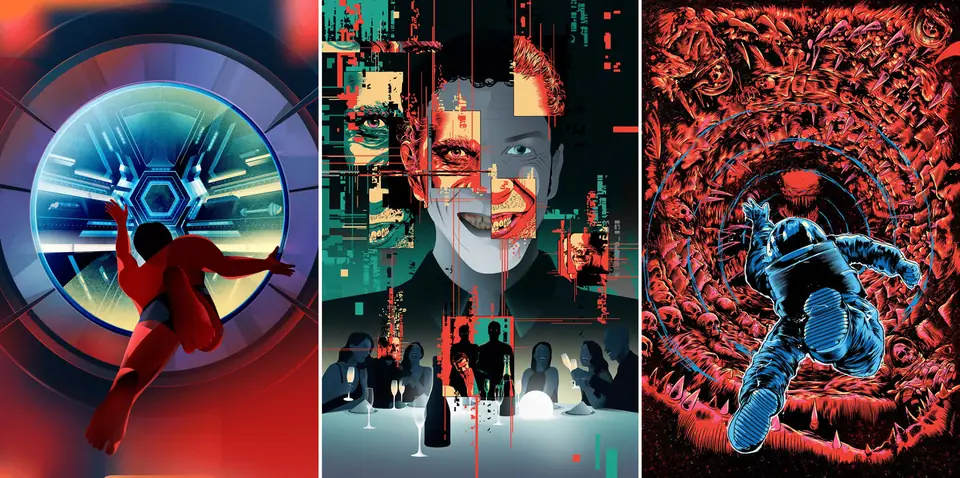
Most people met it in 2019, when Netflix adapted it as the seventh episode of the first season of Love, Death & Robots. That episode and “Zima Blue,” from the same season, were the first of Reynolds’s stories ever adapted for the screen. And the story has since earned the fine press treatment: Conversation Tree Press printed it as a signed letterpress edition of 500 copies, illustrated by Matt Murphy and Tim McDonagh.
The real Aquila Rift
If you’re like me, you might not realize at first that the place in the title is real. I’m not going to pretend I understand it beyond reading up on it, but here’s the gist, and it helps you feel how far off course this story’s crew ends up.
For the last several million years, our solar system has been moving through a region of space called the Local Bubble, a cavity in the gas between the stars at least a thousand light-years across, blown out by supernovae over the last ten to twenty million years. Think of it as our cosmic neighborhood. Out toward its edge, in the direction of the constellations Aquila and Serpens, sits the Serpens-Aquila Rift: a mass of cold molecular clouds, roughly 750 to 1,650 light-years away, so thick with dust that it blocks the light of the stars behind it. On a dark night you can see it as part of the black lane that splits the Milky Way.
So in the story’s world, the Aquila Rift is the edge of town. Thom, the narrator, has been out to it once, and it was the worst trip of his life. Ending up past it is something nobody survives intact:
“Beyond the Aquila Rift. It’s shorthand for the trip no one ever hopes to make by accident. The one that will screw up the rest of your life, the one that creates the ghosts you see haunting the shadows of company bars across the whole Bubble. Men and women ripped out of time, cut adrift from families and lovers by an accident of an alien technology we use but barely comprehend.”
What “Beyond the Aquila Rift” is about
Thom captains the Blue Goose, a cargo ship with a crew of three: Thom, Suzy, the syntax runner who plots their routes, and Ray, who keeps the machinery running. They travel through the aperture network, a web of alien-built gateways scattered through the Local Bubble. Nobody knows who built the apertures or exactly how they work, but after two centuries of study, human machines can read their routing syntax with what the story calls “an acceptably low failure rate.” You usually get where you want to go.
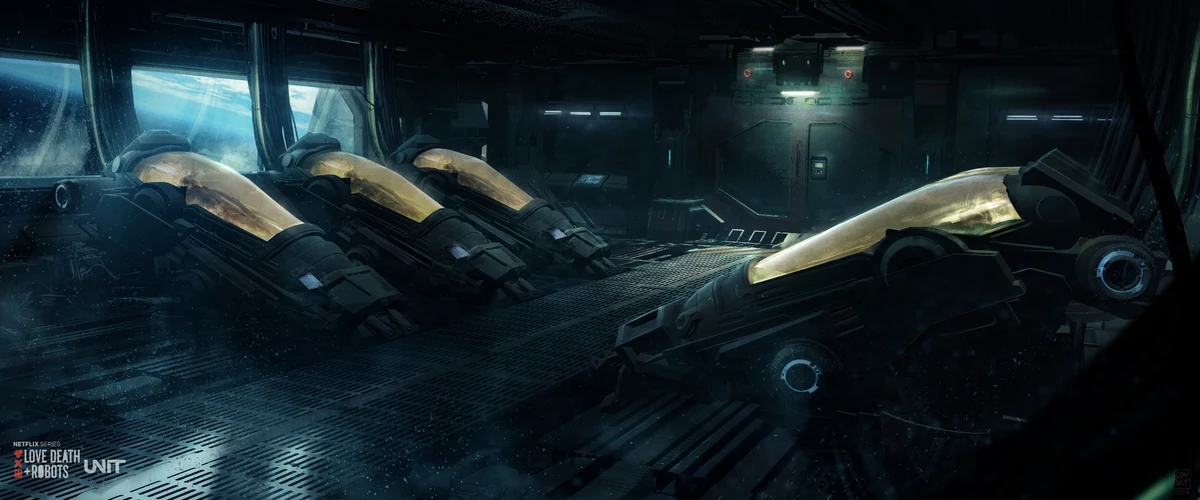
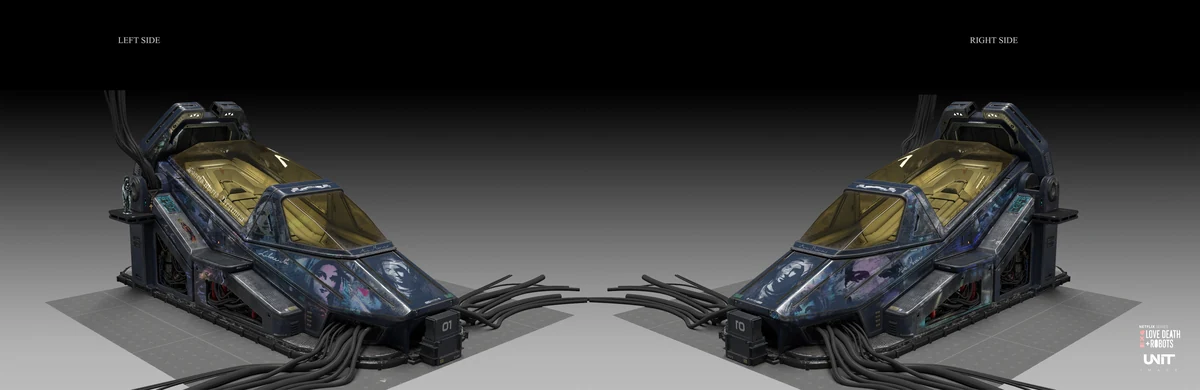
After a customs delay, they rush a departure with some alignment equipment slightly out of true. Thom records a message to his wife, Katerina, saying they might be a few days late, and the crew goes under in their surge tanks for the transit. Suzy has painted hers with a violet and yellow starscape, against regulations, because she refused to disappear into the company’s grey architecture.
Thom wakes up docked at a repair station, feeling worse than he’s ever felt coming out of a tank. A woman named Greta, an old flame he hasn’t seen in a decade, tells him they’ve had a routing error and are twenty days off schedule. He should leave the others asleep until the ship’s fixed. While he waits at the station’s hotel, things don’t add up. The same few faces keep turning up in a building made for hundreds. The repairs never get any closer to finished. And the story keeps cutting forward to a scene where Thom is trying to wake Suzy and tell her where they are, and failing.
A lie told out of kindness
The story opens on that failure. Thom pulls Suzy out of her tank and tries to ease her into the news gently. She’s too sharp for it. Her body is telling her she’s been under far too long, and she sees through every softened version he offers. So Thom says “end it,” Greta sedates her, and they put her back in the tank. The conversation never made it out of her short-term memory, so she won’t remember any of it. Thom says he doesn’t know if he can go through with this. Greta tells him he’s a kind man.
That’s the whole story in miniature, on the first page. Thom lies to Suzy because he loves her and wants to spare her pain. But the method is sedation and erasure, and at some point protecting someone that way turns into controlling them. The rest of the story turns the same treatment on Thom.
Because Greta is lying to him too. Thom gets his first real warning under the hotel’s dome, when the holographic sky switches to a starfield so detailed it seems to focus wherever he looks, and he grabs the table to keep from falling into it. That night she tells him the truth, or the first layer of it:
“Don’t hate me for lying to you. It was done out of kindness. I couldn’t break the truth to you in one go.”
Then the dome pulls back. Past the stars, past the wall of the Local Bubble, until the whole neighborhood is a dot.
“You’re a long way out. The station’s orbiting a brown dwarf star in the Large Magellanic Cloud. You’re one hundred and fifty thousand light-years from home.”
This is where the scale of the story becomes annihilating, and it’s because Reynolds is precise. He doesn’t say “impossibly far.” He gives you a number and a galaxy, and the math does the rest: Katerina, his friends, and everyone Thom left behind are long dead. Greta explains that her own crew was the first to arrive, years ago, by the same kind of accident. They built a life out here, and when the next lost ship drifted in, they hauled it to safety and told its crew the truth. Some of them went mad. One killed herself. And helping them turned out to be what saved Greta’s people:
“In all honesty, it was good for us that another ship came through. Not just because they had supplies we could use, but because it helped us to help them. Took our minds off our own self-pity. It made us realize how far we’d come…”
Caring for the newly lost gives the already lost something to live for. It’s one of the most recognizable human impulses in the whole story, and it’s the one the ending turns inside out.
What makes you think they haven’t?
Thom starts to settle in. He even feels a strange sort of pride, as if he’s been privileged to come farther than almost anyone in history. But he didn’t arrive at that peace on his own. He was guided into it, and the guidance starts to show. The hotel gets busier, and every face in it is someone he’s seen before somewhere else. “Nothing here is real, is it?” he asks. Greta shakes her head.
Suzy and Ray are dead. Over a journey that long, paint particles from their customized tanks clogged the intake filters, the exact risk that made Suzy’s starscape against regulations. Thom is still in his own unpainted tank, and the station, the hotel, the dome, and the people are all being fed into his head.
Then Greta shows him the bigger picture. The aperture network around the Local Bubble is one small piece of something much larger:
“It used to span the galaxy,” Greta says. “Then something happened. Something catastrophic, which I still don’t understand. A shattering, into vastly smaller domains.”
There are hundreds of those domains, each one a local scrap of the old network, and Thom does the arithmetic. If humans have stumbled into this place by accident, why hasn’t anyone else? Greta’s answer is the best line in the story: “What makes you think they haven’t, Thom?”
He asks to see everything as it really is, including her. She warns him what will happen:
“You won’t be able to take the raw reality of what’s happened to you. You’ll shrivel away from it. You’ll go mad, unless I substitute a calming fiction, a happy ending.”
He insists, and he gets a glimpse: wormed-out caverns in a rock, things scurrying through them on clawed limbs, the hulks of ships from civilizations he has no names for, and at the center, the creature from the passage at the top of this page, drumming messages to its helpers. Something that has been waiting for eternities to care for the souls of the lost.
And then the story does the cruelest thing it can do. Thom wakes up in his surge tank. Katerina is there. So is Suzy, alive and complaining: a minor routing error, forty days off schedule, bang goes the bonus. He’s furious and pounds the side of the tank, and Katerina puts a hand on his shoulder and tells him he’s home and dry, and that’s all that matters. For a moment Thom almost remembers someone else, a woman he hasn’t thought about in years. He almost has her name. Then the moment passes.
An alien that notices
Read that ending carefully, because it tells you the creature has learned. In the earlier cycles it built its fiction around Greta, and Suzy kept seeing through it. So this time it starts over with a better design: the wife instead of the old flame, the crew alive, a delay small enough to believe. The trap is better now, and Thom will never know he’s in it.
The distance, the dead wife, and the antlered thing in the dark are all frightening, but the real horror is that the creature is compassionate. As far as the story tells us, it isn’t feeding on Thom or studying him. It found him lost and wanted to help. But its help means taking away his ability to choose. Every time the fiction cracks, it patches the crack. Compassion without consent, practiced with infinite patience, starts to look like a prison with very good furniture.
Put it next to Solaris and the difference is sharp. Lem’s ocean builds Harey out of Kelvin’s memories with no idea what she means to him. It’s powerful and confused, what Kelvin calls a defective god. Reynolds’s creature also builds people out of memory, but it understands that Thom is suffering and tailors every fiction to ease it. It can read his memories, model his desires, and predict which reality he’ll accept. What it can’t do is ask him what he wants and honor the answer. The Lovecraftian tradition gives us cosmic beings that don’t notice us. Reynolds gives us one that notices, tries its hardest, and still can’t reach us.
And the first page has already shown it in human form, with Thom and Suzy. Most of us have been on one side of that or the other: a hard truth held back from someone we love, for their own good, by people who were sure they knew best. The story asks how far that kindness can go before the person on the receiving end stops being a person and becomes a patient.
The Love, Death & Robots episode
The 2019 episode, made by the French studio Unit Image and directed by Léon Bérelle, Dominique Boidin, Rémi Kozyra, and Maxime Luère from a script by Philip Gelatt, is a good seventeen minutes of photoreal animation, and its reveal of what Greta really is lands hard. But a story this layered loses a lot at that length.
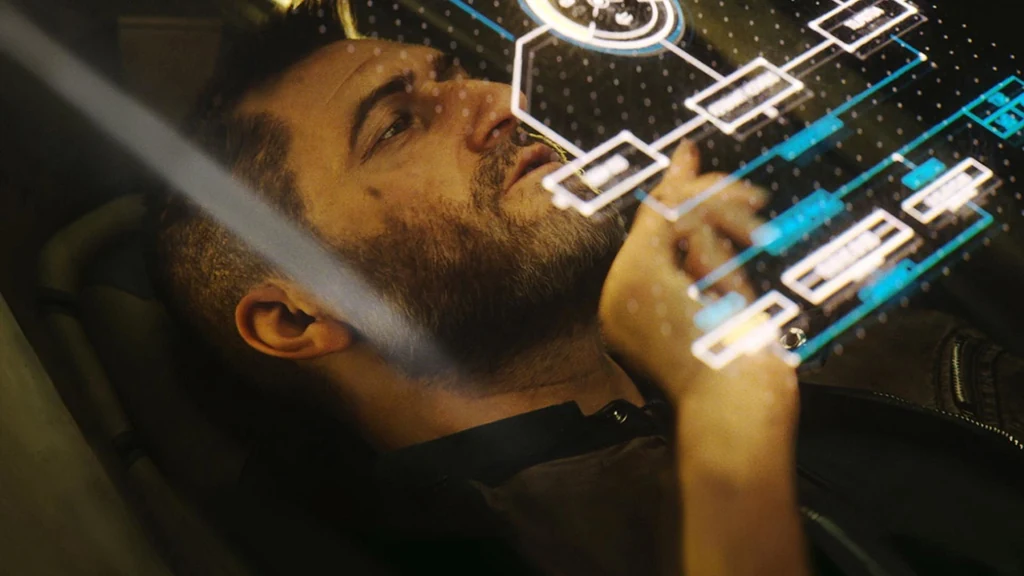
The biggest change is the ending. In the episode, when Thom breaks down at the sight of the truth, the creature resets him and Greta greets him all over again. In the story, the reset swaps Greta out for Katerina and brings Suzy back, which is how you know the creature is learning and refining its care. Without that, and with a reveal staged as a monster scene, the episode makes the alien read as predatory, a spider with a victim. The story’s version is more disturbing because the creature is sincere.
The episode also has to drop the shattered galactic network and Greta’s “what makes you think they haven’t,” and Suzy’s painted tank loses its payoff. If you’ve only seen the episode, you’ve seen the outline of the story without most of what fills it in.
Where it stumbles
My complaints are minor. The middle stretch at the hotel, with its repeated check-ins on repairs that never progress, does its job of building unease but takes a little longer about it than it needs to. And when the truth finally comes out, a fair amount of it arrives as Greta explaining things across a dinner table: the earlier ships, the shattered network, the other domains. It’s fascinating material, and Reynolds makes it land, but it’s the one place the story tells more than it shows. Neither problem comes close to spoiling the ending.
Should you read it?
Yes, especially if you’ve seen the episode. You know the shape of it already, and the story will still surprise you, because the parts the episode cut are the parts that make it sad instead of only scary. It’s a short read with hard science underneath it, a slow-dawning mystery, and one of the most unsettling aliens in the genre, made unsettling by kindness.
If it gets under your skin, Solaris and Roadside Picnic are the natural companions, the two great novels about aliens that don’t understand us or don’t notice us at all. And the rest of Zima Blue, including the title story Netflix also adapted, is a good next step into Reynolds. And if you want another short story about a person who learns that everyone around them might not be real, read my review of Heinlein’s “All You Zombies”.
What do you make of the creature? Is what it does for Thom mercy, or a prison? Tell me in the comments.
Read Beyond the Aquila Rift yourself
The story is collected in Zima Blue (Gollancz), alongside “Zima Blue” itself.
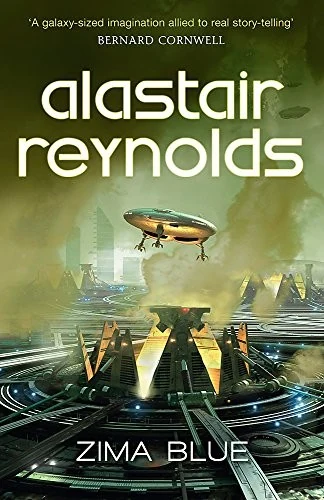
Mysterious Galaxies is a Bookshop.org affiliate. If you buy the book through the link below, the channel earns a small commission at no extra cost to you.

FAQs
What is “Beyond the Aquila Rift” by Alastair Reynolds about?
Thom, captain of the cargo ship Blue Goose, wakes from a routine trip through an alien gateway network to find himself at a repair station, told by an old flame named Greta that a routing error has left him twenty days off schedule. The truth comes out in layers: he’s 150,000 light-years from home in the Large Magellanic Cloud, centuries have passed, his crew is dead, and the station is a simulation run by an alien creature that cares for lost travelers by feeding them comforting fictions.
What does the ending of “Beyond the Aquila Rift” mean?
After Thom sees the truth, he wakes in his surge tank with his wife Katerina and his crewmate Suzy, told he’s had a minor routing error and is home. It’s a new simulation. The creature has learned from its earlier attempts built around Greta, which kept collapsing, and has designed a more convincing fiction. Thom almost remembers Greta, then forgets. The ending shows a caretaker that keeps refining its care and never lets him choose the truth.
Is the Aquila Rift real?
Yes. The Serpens-Aquila Rift is a region of cold, dusty molecular clouds roughly 750 to 1,650 light-years from Earth, near the edge of the Local Bubble, the cavity in interstellar gas our solar system is moving through. Its dust blocks the light of the stars behind it, forming part of the dark lane across the Milky Way. In the story, ending up beyond it means you’ve gone far past the edge of known space.
How is the Love, Death & Robots episode different from the story?
The 2019 episode (season one, episode seven, by Unit Image) keeps the core reveal but compresses the story to seventeen minutes. Its ending resets Thom to the start with Greta again, while the story’s ending rebuilds the fiction around his wife Katerina and a living Suzy. The episode also drops the shattered galactic gateway network and the payoff of Suzy’s painted surge tank, and it frames the creature more as a monster than a caretaker.
Where can I read “Beyond the Aquila Rift”?
It first appeared in the anthology Constellations (DAW, 2005). It’s collected in Zima Blue and Other Stories (Night Shade, 2006), the Gollancz edition Zima Blue, and Beyond the Aquila Rift: The Best of Alastair Reynolds (Gollancz and Subterranean Press, 2016). Conversation Tree Press has also published a signed, illustrated letterpress edition.
Who is Alastair Reynolds?
A Welsh science fiction writer, born in 1966, with a PhD in astrophysics from the University of St Andrews. He worked for the European Space Agency in the Netherlands from 1991 to 2004 before writing full time. He’s best known for the Revelation Space novels, House of Suns, and short fiction like “Zima Blue” and “Beyond the Aquila Rift.”
Sources
- Alastair Reynolds, “Beyond the Aquila Rift,” in Zima Blue (Gollancz); first published in Constellations, ed. Peter Crowther (DAW, 2005). Dashes inside quotations are rendered as commas on this page.
- Wikipedia, “Beyond the Aquila Rift” (first publication; the 2016 collection; the Netflix adaptation)
- Wikipedia, Zima Blue and Other Stories (Night Shade, 2006, and its contents)
- Wikipedia, “Alastair Reynolds” (education, ESA career, and awards)
- Wikipedia, “List of Love, Death & Robots episodes” (episode credits, runtime, and ending)
- Wikipedia, “Serpens-Aquila Rift” and “Local Bubble” (the real astronomy)
- Conversation Tree Press, Beyond the Aquila Rift (the letterpress edition and its illustrations by Matt Murphy and Tim McDonagh)
- Pierre Loyvet, Blue Goose interior concept art, ArtStation (the two concept images)
- The Movie Database (TMDB), “Beyond the Aquila Rift” episode stills (the episode still)
- Open Library, Zima Blue (Gollancz) (the cover image)
- Wikimedia Commons, Alastair Reynolds, photo by Robert Day (CC BY-SA 2.0)
SOURCE · Alastair Reynolds, "Beyond the Aquila Rift" (published 2005).
Transmissions from ground control