▸ The time loop that leaves one person alone in the universe
All You Zombies by Robert A. Heinlein: The Loneliest Time Travel Story Ever Written
| SUBJECT | Robert A. Heinlein |
| PUBLISHED | "ALL YOU ZOMBIES" (PUBLISHED 1959) |
| RUNTIME | 13:08 |
| STATUS | ONE PERSON · EVERY ROLE |
Robert A. Heinlein wrote “All You Zombies” in a single day in July 1958, and it’s still the time travel story every other time travel story gets measured against. In about twenty pages, one person becomes their own mother, their own father, their own child, their own seducer, and their own recruiter. It’s the kind of story you finish and immediately want to diagram, and in 2014 it became the film Predestination.
Here’s my verdict up front. This is one of the best short stories in science fiction, and I’d put it in front of anyone who says they don’t like the genre. The paradox is what people remember, and it deserves the reputation. But what keeps me coming back is what Heinlein does with the paradox on the last page: he turns a clever loop into one of the loneliest endings I’ve ever read. My only real reservation is that some of its 1959 attitudes show, and I’ll get to those.
A note before we go on: this is a full-spoiler review, last line included, and the video above covers the same ground. The story takes about twenty minutes to read, so if you want to meet it cold, now’s the time.
“The Snake That Eats Its Own Tail, Forever and Ever. I know where I came from, but where did all you zombies come from?”
Written in a day, turned down by Playboy
By 1958 Heinlein was already one of the most important writers in American science fiction, usually grouped with Isaac Asimov and Arthur C. Clarke as the genre’s big three. He was a former naval officer and engineer, he’d spent the 1950s writing juvenile novels for Scribner’s, and the books he’s best known for now, Starship Troopers, Stranger in a Strange Land, and The Moon Is a Harsh Mistress, were either just ahead of him or still in progress. In 1974 the Science Fiction Writers of America made him their first Grand Master.
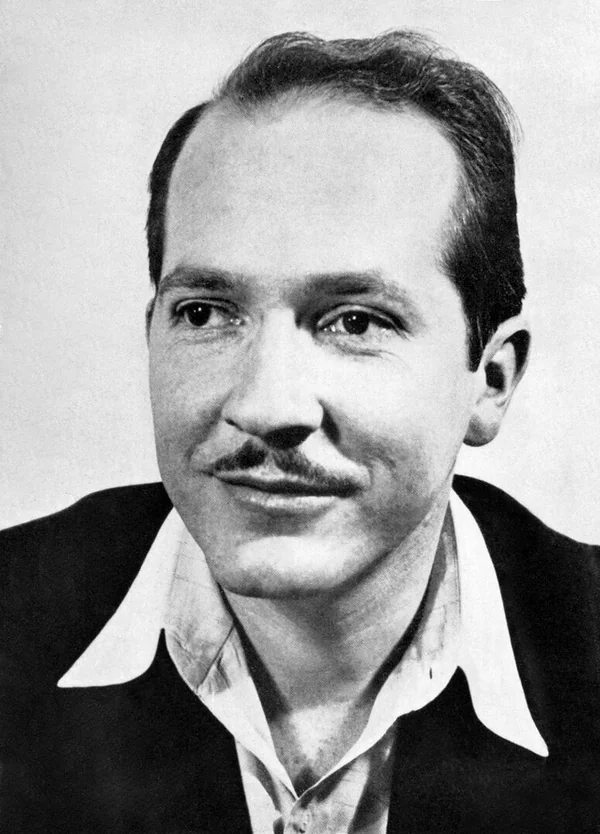
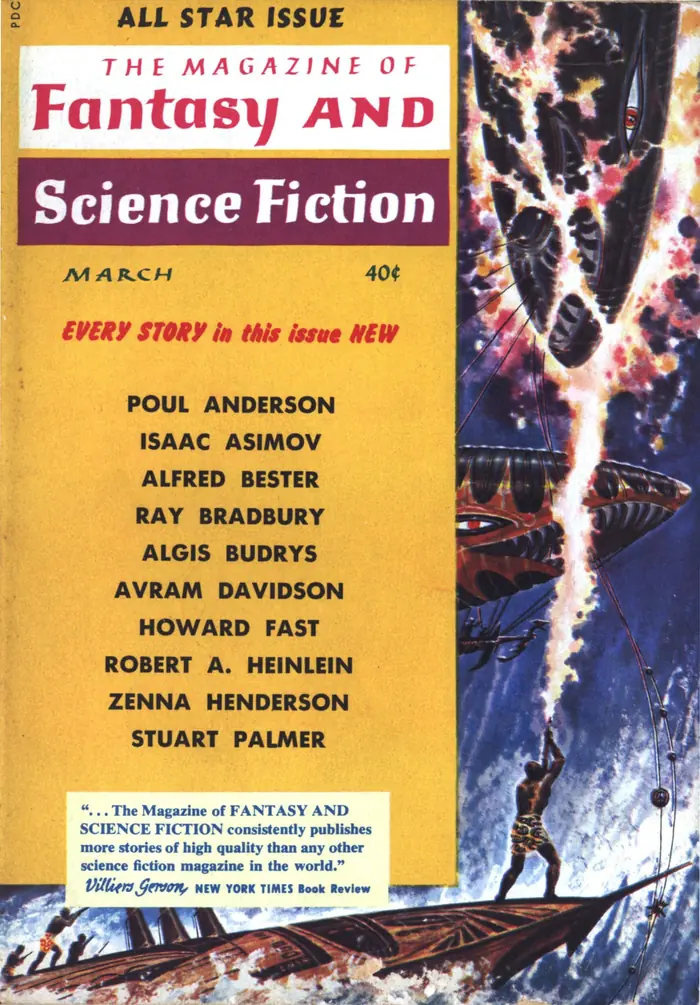
He wrote “All You Zombies” on July 11, 1958, start to finish, and sent it to Playboy. Playboy passed. It ran instead in the March 1959 issue of The Magazine of Fantasy and Science Fiction, billed on the cover as an all-star issue, with Heinlein sharing the lineup with Asimov, Ray Bradbury, Alfred Bester, and Poul Anderson. Later that year Gnome Press collected it in The Unpleasant Profession of Jonathan Hoag, alongside “They” and “And He Built a Crooked House,” and it’s been turning up in anthologies ever since, including the one where I first read it.
One small detail tells you how the story thinks. Its original title is punctuated with quotation marks and dashes on both sides, because the phrase is a fragment lifted out of the middle of a sentence. You don’t find out whose sentence until the last page.
It also wasn’t Heinlein’s first try at the idea. In 1941, writing as Anson MacDonald in Astounding Science Fiction, he published “By His Bootstraps,” a novella about a graduate student named Bob Wilson who gets pulled through a time gate and keeps running into other versions of himself. That one is a puzzle box, and a fun one. Eighteen years later Heinlein took the same machinery and pushed it as far as it could go, and the result isn’t fun at all.
What “All You Zombies” is about
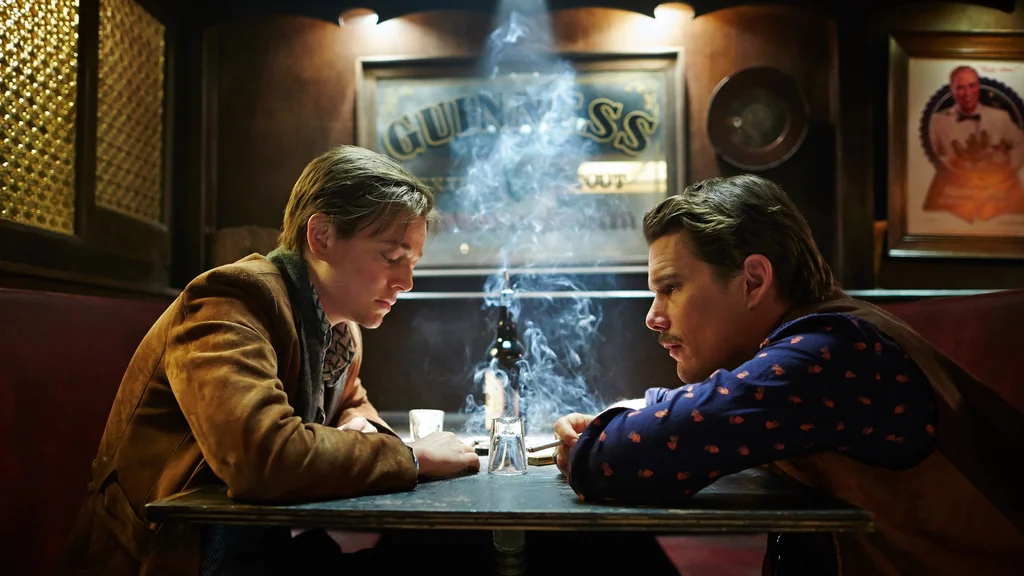
It’s November 7, 1970, at a bar called Pop’s Place in New York. The bartender narrating the story is an agent of the Temporal Bureau, a time-travel outfit that recruits its people from all over history, and each section of the story is stamped with a time and date like an entry in a log. He’s there to recruit a bitter twenty-five-year-old regular known as the Unmarried Mother, a nickname that comes from his job: “I’m an unmarried mother,” he tells people, and if he’s feeling less than murderous, he adds, “at four cents a word. I write confession stories.”
Over a bottle of whiskey called Old Underwear, the bartender bets him that his life story can’t surprise him, and the young man tells it. He was a foundling, left at a Cleveland orphanage in 1945 and raised there as a girl named Jane. At eighteen, Jane fell for a kind stranger with a wad of hundred-dollar bills:
“He was the first man I ever met who was nice to me without trying games with me. I quit night school to see him oftener. It was the happiest time of my life.
“Then one night in the park the games began.”
He walked her home, told her he loved her, and never came back. She was pregnant. During the Caesarean, surgeons found she had two complete sets of reproductive organs, and when she woke up, her surgeon broke the news:
“‘That’s what I’m saying. You’re a man.’
“I tried to sit up. ‘What?'”
They’d rebuilt her as a man. A month later, a stranger walked out of the hospital nursery with her baby girl. Jane, now a man with no trade and no future, moved to New York and started writing confession stories.
Then the bartender opens a suitcase that turns out to be a time machine, and the loop starts closing. If you’ve never seen it laid out, here’s the whole life in the order it’s lived:
- September 1945: a baby girl is left on the orphanage steps in Cleveland. She grows up as Jane.
- Spring 1963: Jane falls for a kind stranger, who is her own older self, sent back from 1970 by the bartender.
- 1964: Jane gives birth, wakes up as a man, and loses the baby to a kidnapper, who is the bartender.
- 1970: the Unmarried Mother walks into Pop’s Place, tells his story, and is sent back to 1963.
- 1985 onward: recruited into the Temporal Bureau, he spends decades jumping through time and becomes the bartender, who steals the baby, leaves her at the orphanage in 1945, and goes to Pop’s Place to recruit himself.
The baby, the girl, the lover, the writer, and the bartender are one person.
A whole family tree made of one person
Plenty of time travel stories have a loop in them. What sets this one apart is how completely Heinlein closes it. In “By His Bootstraps,” a man meets himself. Here a person is their own entire family, a closed system with nothing coming in from outside. Ask what came first, the chicken or the egg, and the story’s answer is that they’re the same bird.
The cruelest part is how it answers Jane’s one wish. Growing up in the orphanage, she made a promise to herself:
“I made a solemn vow that any kid of mine would have both a pop and a mom.”
She gets it. Her child has a mother and a father, and both of them are Jane, and so is the child. And the man who seduced her and vanished, the villain of the Unmarried Mother’s life, turns out to be the Unmarried Mother. There’s nobody outside the loop to blame. I’ll admit I didn’t see that turn coming on my first read, and it blew my mind. Maybe you’re a sharper reader than I am.
What makes the story a pleasure to reread is how much Heinlein hides in plain sight. In the first few pages, before the young man has told him anything, the bartender explains the ring on his finger:
“The Worm Ouroboros… the World Snake that eats its own tail, forever without end. A symbol of the Great Paradox.”
When the young man describes the kidnapper, he says he was “just a man, with a face-shaped face, like yours or mine,” and he’s saying it to the kidnapper. As the two of them head for the time machine, the jukebox starts playing “I’m My Own Grandpaw,” the 1940s novelty song about a man who marries his way into being his own grandfather, and the bartender yells at his staff to shut it off. Heinlein couldn’t resist the joke, and his narrator couldn’t stand to hear it.
Even the reveal is played dry. When the bartender collects the young man in 1963, right after he’s kissed Jane goodnight on her porch, he spells it out:
“Me. Now you know who he is, and after you think it over you’ll know who you are… and if you think hard enough, you’ll figure out who the baby is… and who I am.”
And then he adds the driest line in the story: “It’s a shock to have it proved to you that you can’t resist seducing yourself.”
Where did all you zombies come from?
If the story ended with the loop closing, it would be a great puzzle. The last page is what makes it great literature.
The bartender finishes his assignment and jumps forward to headquarters in January 1993. He’s tired. He’s put in thirty subjective years of time jumping. He pours a drink from the bottle he won, which he won from himself.
“It tasted foul, and I wondered why I had ever liked Old Underwear. But it was better than nothing; I don’t like to be cold sober, I think too much. But I don’t really hit the bottle either; other people have snakes, I have people.”
Seeing snakes is old shorthand for the hallucinations of the DTs, what a real drunk sees when the bottle has him. This man’s hallucination is people. Over his bed hangs a list he used to find inspiring as a recruit, the By-Laws of Time:
Never Do Yesterday What Should Be Done Tomorrow.
A Paradox May Be Paradoctored.
Ancestors Are Just People.
They don’t inspire him anymore. He undresses, sees the Caesarean scar mostly hidden now under body hair, looks at the ring, and thinks the line the title was cut from: he knows where he came from, but where did all you zombies come from?
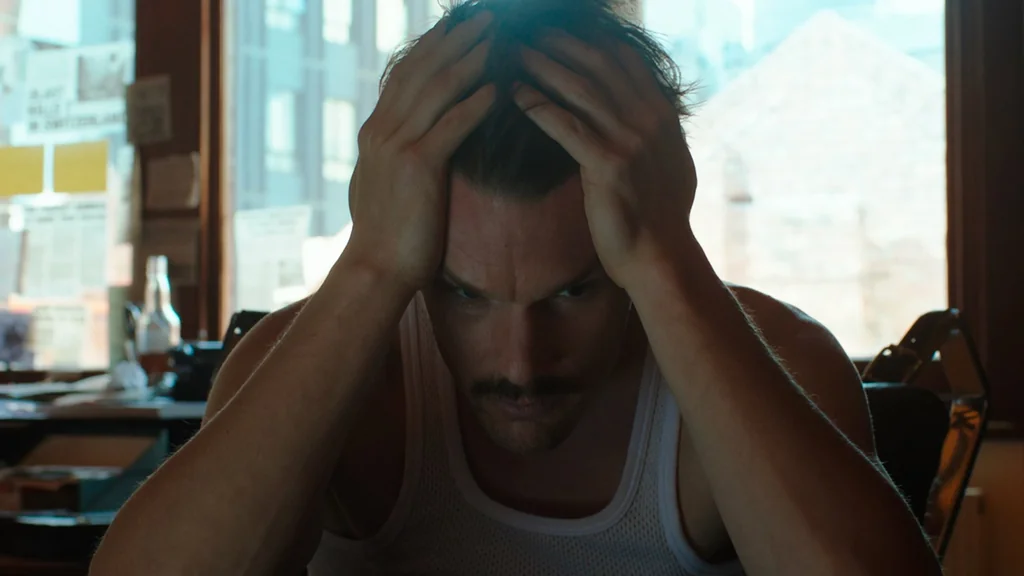
He knows his own origin exactly. He came from himself. And once he knows that, everyone else becomes the mystery. Every significant person in his life turned out to be him, so how can he trust that anyone else is real? That’s who the zombies are: other people, who walk and talk, but whose inner lives he can’t confirm. The philosophical name for this is solipsism, the idea that your own mind is the only one you can prove exists. For most of us it’s a thought experiment. Heinlein builds a world where it’s physically true for one man, and then he adds a line that should make your skin crawl:
“I felt a headache coming on, but a headache powder is one thing I do not take. I did once, and you all went away.”
He dulled his own head once, and the rest of the world went out like a light. And then the ending:
“You aren’t really there at all. There isn’t anybody but me, Jane, here alone in the dark.
“I miss you dreadfully!”
I think that’s one of the most affecting endings in the genre. He calls himself Jane. After the surgeries and the decades and the loops, a hardened agent still thinks of himself as the lonely girl from the orphanage. And the “you” he misses could be the woman he used to be, the lover he once had, or the child he once carried, and all of them are him. He misses himself. More than that, he misses the belief that he was ever connected to anyone outside his own closed loop.
It reminds me of Stanisław Lem’s Solaris, where scientists end up living with beings built out of their own memories and can never be sure real contact with another mind is possible. Heinlein’s bartender has the same problem with a literal mirror. And if you’ve read much Philip K. Dick, you know this fear well: the suspicion that the world is a projection and you’re the only real thing in it. Most of us never get proof that the people we love are separate from us. We take it on trust, and this story shows you what it would feel like to lose that trust for good.
Jane in 1959
Readers coming to the story now often ask how it handles Jane, so it’s worth knowing what Heinlein actually wrote. Jane is intersex: born with both sets of organs, raised as a girl, and reassigned as a man by surgeons after the birth, without being asked. When the Unmarried Mother starts his story, he points the bartender to two real people, Christine Jorgensen and Roberta Cowell, whose transitions made headlines in the early 1950s. Heinlein was writing for readers who’d seen those stories in the papers.

The story’s ideas about women are very much of 1959. Jane’s plan for escaping the orphanage was to join the W.E.N.C.H.E.S., the Women’s Emergency National Corps, Hospitality & Entertainment Section, a military corps that trains women to keep spacemen company, and the acronym is a period joke that hasn’t aged well. After the surgery the Unmarried Mother calls himself ruined:
“I was as ruined as a woman can be; that bum really ruined me, I was no longer a woman… and I didn’t know how to be a man.”
That’s the closest thing I have to a criticism, and it barely dents the story. The future around Jane has dated, but her loneliness hasn’t, and the loneliness is what the story runs on. Heinlein came back to the idea of a person living in a body of the other sex at much greater length in his 1970 novel I Will Fear No Evil, in which an old man’s brain is transplanted into his young secretary’s body.
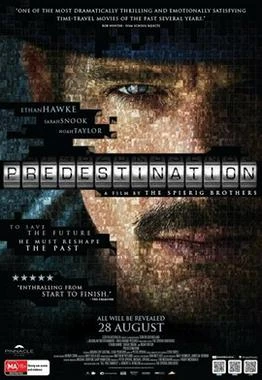
Predestination
If the story sounds familiar, you may have seen Predestination, the 2014 Australian film written and directed by Michael and Peter Spierig, with Ethan Hawke as the agent and Sarah Snook as Jane and the Unmarried Mother. It keeps Heinlein’s structure, from the bar and the bet to the loop, and adds a thriller plot about a bomber the agent is hunting. The story gives the filmmakers an opening for that, in a line the bartender drops in passing about his agency’s work:
“Everybody knows now why the Fizzle War of 1963 fizzled. The bomb with New York’s number on it didn’t go off, a hundred other things didn’t go as planned, all arranged by the likes of me.”
If you came to the story through the movie, you’ll find the whole skeleton here in a fraction of the time.
Should you read it?
Yes, and if you haven’t seen Predestination, read the story first. It costs you twenty minutes. You get the most complete time loop in science fiction, a narrator with a bone-dry sense of humor, and an ending that turns a brain teaser into something sad and strange. I’ve read a lot of time travel fiction, and this is the one I’d hand to someone first.
If it hooks you, “By His Bootstraps” is the natural next read, so you can see where Heinlein started. And if the ending is the part that gets under your skin, Solaris is the book I’d pair it with. For another short story about a lost man who can’t be sure the people around him are real, read my review of Alastair Reynolds’s “Beyond the Aquila Rift”.
Have you read “All You Zombies,” or did you come to it through Predestination? And who do you think the “you” is in that last line? Tell me in the comments.
Read or hear All You Zombies yourself
I first read the story in The Road to Science Fiction, Volume 3: From Heinlein to Here, edited by James Gunn. The audiobook is “All You Zombies”: Five Classic Stories, read by Spider Robinson.
Mysterious Galaxies is a Libro.fm and Bookshop.org affiliate. If you buy the audiobook or physical book through the links below, the channel earns a small commission at no extra cost to you.


FAQs
What is “All You Zombies” by Robert A. Heinlein about?
A time-traveling bartender in 1970 listens to a young man’s life story: born a girl named Jane, seduced and abandoned, robbed of her baby, and reassigned as a man by surgeons. The bartender then takes him back in time to find the man who ruined him. By the end, every major character, the baby, Jane, the seducer, the young man, and the bartender, is revealed to be the same person at different points in one closed time loop.
Who is who in “All You Zombies”?
They’re all one person. Jane is left at an orphanage as a baby in 1945. In 1963 she’s seduced by a stranger, who is her own older self, sent back from 1970. In 1964 she gives birth and is surgically made a man. That man becomes the Unmarried Mother, a confession-story writer, and is later recruited into the Temporal Bureau, where he ages into the bartender. The bartender steals Jane’s baby and leaves her at the orphanage in 1945, so Jane is her own mother, father, and child.
What does the title “All You Zombies” mean?
It comes from the narrator’s last thoughts: “I know where I came from, but where did all you zombies come from?” Because every important person in his life turned out to be himself, he knows his own origin and can’t account for anyone else’s. The “zombies” are other people, whose minds he can’t confirm are real. The original title is punctuated with quotation marks and dashes because it’s a fragment taken from the middle of that sentence.
Is Predestination based on “All You Zombies”?
Yes. Predestination (2014), written and directed by the Spierig brothers and starring Ethan Hawke and Sarah Snook, is adapted directly from the story. It keeps the bar, the bet, and the loop, and adds a plot about a bomber the agent is hunting.
When was “All You Zombies” written and published?
Heinlein wrote it in one day, July 11, 1958. Playboy turned it down, and it was first published in the March 1959 issue of The Magazine of Fantasy and Science Fiction. Gnome Press collected it later in 1959 in The Unpleasant Profession of Jonathan Hoag.
How is “All You Zombies” related to “By His Bootstraps”?
“By His Bootstraps” is a 1941 Heinlein novella, published under the pen name Anson MacDonald, in which a graduate student meets several versions of himself in a time loop. “All You Zombies,” written eighteen years later, takes the same idea further by making one person their own parents and child.
Sources
- Robert A. Heinlein, “All You Zombies,” The Magazine of Fantasy and Science Fiction, March 1959, at the Internet Archive (the story’s first appearance and the cover scan. Dashes inside quotations are rendered as commas on this page.)
- Wikipedia, “All You Zombies” (written July 11, 1958; the Playboy rejection; the title’s punctuation; Predestination)
- Wikipedia, The Unpleasant Profession of Jonathan Hoag (collection) (Gnome Press, 1959, and its contents)
- Wikipedia, “By His Bootstraps” (Astounding Science Fiction, October 1941, as Anson MacDonald)
- Wikipedia, I Will Fear No Evil (1970, and its premise)
- Wikipedia, “Robert A. Heinlein” (career, the Scribner’s juveniles, and the 1974 Grand Master award)
- Wikipedia, “Predestination (film)” (directors and cast; the poster image)
- The Movie Database (TMDB), Predestination backdrops (the three film stills)
- FantLab, The Magazine of Fantasy and Science Fiction, March 1959 (cover art credit to Ed Emshwiller)
- Wikimedia Commons, Robert A. Heinlein (Doubleday photo) (author portrait, public domain)
SOURCE · Robert A. Heinlein, "All You Zombies" (published 1959).
Transmissions from ground control