▸ Essay
Why Star Ratings Are Broken, and How I Judge Books Instead
| FILED | AUGUST 24, 2026 |
| SECTION | Thoughts |
I don’t give books star ratings. Not in the videos, not here on the site, and I get asked about it often enough that it’s worth writing down properly.
Before I start, the part I always say first: this isn’t a shot at anybody who uses them. Goodreads works. StoryGraph works. Plenty of reviewers I’m friends with rate out of five and do a fine job with it. What follows is my rationale for my own reviews, and if it doesn’t move you, no hard feelings.
The whole thing comes down to what I’m trying to do here. Every review I make is aimed at one practical question: should you spend the next twelve or fifteen hours of your life inside this book? A number can’t answer that. Below is why I think so, and what I do instead.

A rating is a snapshot of something that keeps moving
Take Joseph Conrad’s Heart of Darkness. The first time I read it, in high school, I hated it. I couldn’t connect with a line of it, and I suspect a decent chunk of that was simply that it had been assigned to me. I read it again in undergrad because I had to, and my feelings barely budged. Not my thing.
Years later I picked it up on my own terms and it floored me. The layers started showing. I went looking for criticism and analysis of the novella, and I read up on what King Leopold II actually did in the Congo, which is grim history and which sits under every page of that book. What I’d written off as a slog turned into a dense, deeply uncomfortable piece of writing about empire, morality, and what people turn out to be capable of.
High-school me would have given it two stars, tops. Today I’d call it a masterpiece. So which number was right? Neither one. A rating is a snapshot, and reading is a journey. The book didn’t change. I did.

The same five stars can’t measure two different books
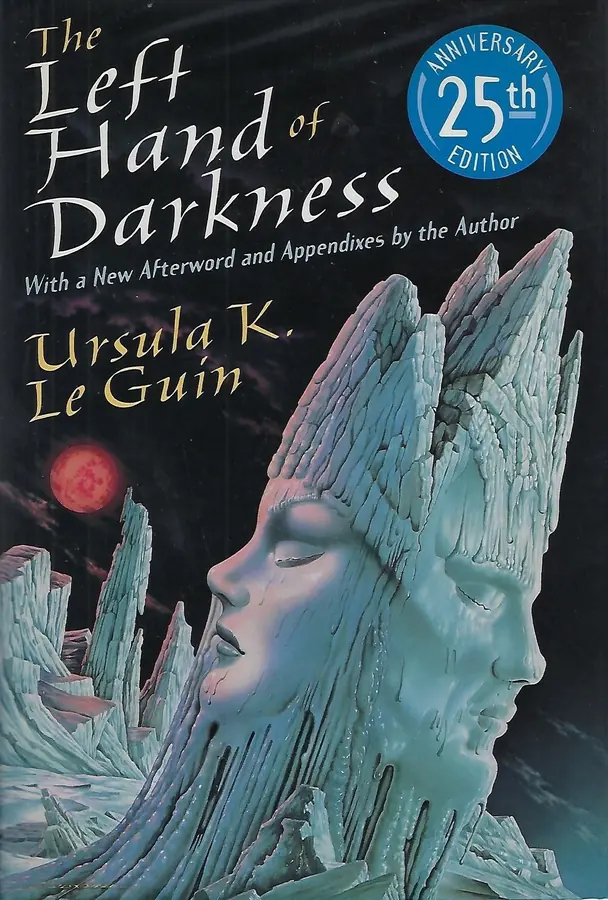
I get enormous joy out of the sheer absurdity of Matt Dinniman‘s Dungeon Crawler Carl. It’s fast, it’s genuinely funny, and it’s proudly ridiculous. I also love the quiet precision of Ursula K. Le Guin’s The Left Hand of Darkness, and everything it works out about gender, culture, and what we owe one another.
Both of those get top marks from me. But they aren’t doing the same job, they aren’t built for the same reader, and they aren’t asking to be measured against the same standard. Scoring them both on one five-point scale is like scoring a roller coaster against a symphony. You can do it. The result just doesn’t tell anyone anything.
I used to watch students skip straight to the letter
I taught before I changed careers. I’d hand back work with pages of notes on it: what was working, what wasn’t, exactly where the argument came apart and how to shore it up. And I’d watch students find the letter at the top, register it, and stop. A, B, C. That was the whole transaction. It didn’t matter how careful the feedback was or how long I’d spent writing it. The grade was the part that stuck, and everything else may as well have been blank paper.
Star ratings do the same thing to a review. Put a number at the top and the number becomes the review. Everything underneath it turns into decoration.
Nobody actually agrees on what the numbers mean
Three stars, to me, means it’s okay. It’s an average book, and that’s a perfectly respectable thing for a book to be. Not everything has to rearrange your insides. Some books are just enjoyable for what they are.
That’s not how everyone reads it. For some people a three feels like a slap. Even four stars, which in my head means “this is really good,” can land badly with authors and readers who treat anything short of five as an insult. So the number I’d use as a compliment gets received as a wound, and I’ve communicated the opposite of what I meant while thinking I was being clear.

The two cases stars handle worst
Here’s the first one. A book is structurally a mess, the pacing sags, the plot doesn’t hold together, and it contains a character I would follow anywhere. Three stars? Now you read that as “mediocre across the board” and skip it, when the honest advice is that this one person on the page is worth the whole ticket price. S.A. Barnes’s Dead Silence is close to this for me: I have a real, specific problem with a choice that book makes, and I’d still hand it to you.
Second one, running the other direction. A book is technically superb and it left me cold. Four stars makes it look broadly appealing when my actual verdict was narrower and more useful: this is very good and it wasn’t for me, and here are the specific reasons, so you can work out whether those reasons are yours too.
Two stars has the same disease. It tells you I didn’t enjoy something. It never says whether the trouble was the pacing, the characterization, or a plain mismatch between the book’s mood and mine the week I read it. Those are three different pieces of information, and only one of them is about the book.

The interesting books are often the ones sitting at 3.5
Be honest: have you ever seen a 3.5 average on Goodreads and quietly moved on? I have. I’ve done it plenty.
And some of my favorite books of all time, the ones that changed how I think or set something off in me, live right in that middle band. They’re messy, or uneven, or divisive enough that half the readers who finish them come away annoyed. That’s frequently what makes them worth talking about. Roadwork is one of the least loved things Stephen King ever published under any name, and I’ll argue for it all day. An aggregate score flattens all of that into a number that reads as a shrug.

There’s a person on the other end of this
The last piece is respect. For the craft, for the effort, and for the human being behind it.
Writing is hard. It isn’t a matter of putting words next to each other. It’s building a world, filling it with people, and getting a story to land, and even the books that read effortlessly represent months or years of labor, revision, and private doubt. Then there are the editors, the cover designers, the marketing people, everyone else who dragged the thing into existence.
None of which means I go easy. I’ll tell you exactly what didn’t work and why. I did it to K.X. Song’s The Night Ends with Fire, where my central complaint is about the protagonist herself. But there’s a difference between saying “this specific thing failed for me, here’s the mechanism” and reducing somebody’s years of work to a single blunt mark. A negative review can be honest, specific, and useful without tearing anyone down. A two-star rating can’t be any of those things, because it doesn’t say anything.
So what do I do instead
Fair question, because “no stars” on its own isn’t a system. Here’s what I’m actually running through on every book, roughly in this order.
What is this book trying to be?
First thing, before any judgment. A comic LitRPG about a man in his underwear fighting a dungeon is not attempting the same feat as a novel about gender on a frozen planet. I work out what the book set out to do, and then I ask whether it did it. Holding a roller coaster to a symphony’s standards just produces a category error.
Storytelling, character, pacing, theme, one at a time
These are the four I keep coming back to, and I try to give each one its own verdict rather than blending them into an average. A book can have superb characters and terrible pacing. Saying so is more useful than splitting the difference and calling it a three.
Is this a flaw, or is it just not for me?
The most important line I draw, and the one a rating can never show. “The structure collapses in act three” is a problem in the book. “I don’t enjoy this kind of humor” is a fact about me. Both belong in a review. They belong there labeled, so you can discount the second one if your taste runs differently from mine.
What’s worth the price of admission?
Nearly every book has one thing it does better than its neighbors on the shelf. A voice, a single character, a concept, a hundred pages in the middle that are extraordinary. I try to name it precisely, because that’s usually the sentence that tells somebody whether to pick the book up.
What’s still with me weeks later?
Some books are a great time and evaporate on contact. Others keep surfacing at odd hours months after the last page. Both are legitimate, and they’re different products, so I say which one I’m holding. This is also the check that keeps me honest about first impressions, since Heart of Darkness taught me how badly those can age.
Who is this for?
The one every review has to land on. Not “is this good,” but who exactly should read it, and who should let it go by. That’s the sentence I’m building toward the whole time, and it’s the one thing I know a number will never say for me.
A conversation, not a verdict
Star ratings are quick and easy, and I understand the appeal. Books aren’t quick or easy. They’re personal, and what I love you might well bounce off entirely.
So my goal is to hand you the tools to make the call yourself, rather than making it for you. Every review here is meant to open a conversation instead of closing one with a number.
What do you think? Do you prefer reviews without a rating attached, or do you miss having the number there? Tell me in the comments. And if you want to see the method in action, the essays and the episode archive are where it all lives.
FAQs
Why don’t you use star ratings on your book reviews?
Because a single number can’t answer the question my reviews exist to answer, which is whether a specific book is right for a specific reader. A rating flattens storytelling, character, pacing, and theme into one figure, hides whether a low score means the book failed or simply wasn’t to my taste, and pulls attention away from the actual review. I’d rather spend the words explaining what worked, what didn’t, and who the book is for.
Are star ratings bad?
No. They’re useful for tracking your own reading, for sorting a to-be-read pile, and for giving a quick signal at a glance, and plenty of reviewers use them well. My argument is narrower: they’re a poor fit for the kind of review I make, where the whole value sits in the specifics. If star ratings work for how you choose books, keep using them.
How do you review a book without giving it a rating?
I work through six things: what the book was trying to do, how it handled storytelling, character, pacing, and theme, whether a problem is a genuine flaw or a mismatch with my taste, what the single best thing in it is, what stayed with me weeks later, and who should read it. That last one is what every review is building toward. The verdict is a paragraph rather than a number.
Does a 3-star rating mean a book is bad?
Not to me. Three stars in my head means the book is fine, which is a perfectly good thing for a book to be. But readers and authors don’t agree on this at all. Some people treat a three as a serious insult and anything under five as a failure, so the same number sends completely different messages depending on who reads it. That disagreement is one of the reasons I dropped the scale.
How do you tell the difference between a bad book and a book that isn’t for you?
I label them separately. “The structure falls apart in the final act” describes a problem in the book, and it’s the kind of thing most readers will hit. “I don’t enjoy this style of humor” describes me, and you should discount it if your taste runs differently. A star rating merges the two into one figure and loses the distinction, which is exactly the information a reader needs most.
Do you write negative reviews?
Yes, and in detail. I’ll name what didn’t work and explain the mechanism behind it. What I won’t do is reduce years of somebody’s work to a blunt mark with no explanation attached. A critical review can be specific, honest, and genuinely useful while still respecting the labor that went into the book, and that’s the version I aim for.
Should I skip a book with a low Goodreads average?
I wouldn’t, at least not on the number alone. I’ve passed on books because of a 3.5 average and later found out I was wrong. Divisive books often average low precisely because they’re doing something unusual enough to split readers down the middle, and those are frequently the most interesting ones on the shelf. Read what the low reviews actually object to. Sometimes their complaint is the exact thing you’re after.
Can your opinion of a book change over time?
Constantly, and that’s a big part of why I don’t rate. I hated Heart of Darkness in high school and again in undergrad, then reread it years later on my own terms and thought it was extraordinary. Two stars became a masterpiece without a word of the book changing. A rating locks in one moment of one reading, and readers keep moving after it.
Transmissions from ground control