▸ The utopia its richest fans misread
Iain M. Banks’ The Culture and Its Billionaire Fans
| SUBJECT | Iain M. Banks |
| PUBLISHED | THE CULTURE SERIES (1987–2012) |
| RUNTIME | 18:27 |
| STATUS | NOW BROADCASTING |
The richest men on Earth built their fortunes on capitalism. So it’s strange that the science fiction they love best was written to make men like them obsolete.
Elon Musk named his SpaceX drone ships after starships from his favorite series. It reads like a nerdy billionaire’s in-joke. The trouble is that the books he loves were written by an unapologetic socialist, and the society they describe treats one man hoarding hundreds of billions of dollars as a symptom of a sick, primitive civilization.
Musk isn’t alone. Jeff Bezos called the same series one of his absolute favorites, and Amazon has tried to adapt it twice. Mark Zuckerberg put one of the novels in his book club, a story that takes apart the exact kind of competitive, monopolistic empire he built. These are three of the loudest fans of Iain M. Banks‘s Culture: a post-scarcity civilization with no money, no private property to speak of, no corporate overlords, and no class hierarchy, run by benevolent superintelligent AI, where work is voluntary and human flourishing is the only goal.
They are, in almost every way, what Banks wrote against. So how do the ultimate symbols of capitalist excess become the biggest fans of science fiction’s great anti-capitalist vision? Are they enjoying the spaceships and ignoring the politics, or is something more deliberate going on?
They want the utopia. They just plan to own it.
It’s a quiet act of disarmament. They’re selling a future of technological marvels with the economic liberation carefully removed. They want the parts of the Culture that photograph well and none of the parts that would end them.

Elon Musk: The Union-Busting Messianic Huckster
Musk is the loudest and most confused of the fanboys. He once told his followers that he’s “a utopian anarchist of the kind best described by Iain Banks.” A utopian anarchist. The whole point of the Culture is the abolition of wealth and power hierarchies. Musk’s entire life is the accumulation of both. Calling that a misreading is too generous. It’s a delusion.
Start with money. Musk praises the Culture’s post-scarcity future, but his own proposal is “universal high income.” Banks didn’t want everyone to hold a bigger paycheck. The Culture has no paychecks, wages, prices, or money at all. Universal high income leaves the machinery of bosses and workers exactly where it stands and hands the workers a slightly larger allowance. It patches the old system. It doesn’t replace it.
Then the AI. Musk says Banks wrote the best vision of an AI future. The Culture’s Minds are godlike intelligences optimized for empathy and for making the beings around them happier. The AI Musk actually built is Grok, tuned to be “anti-woke,” which he steered until it was calling itself “MechaHitler.” Banks thought real superintelligence would bend toward compassion. Musk’s version bends toward more sophisticated trolling.




Then labor, where the contradiction is sharpest. He christened his drone ships with the names of sentient, egalitarian Culture vessels. On Earth, his companies fight unions hard, from the long standoff with mechanics in Sweden to a reported plan to fire striking workers. In the Culture, coercive labor is treated as a barbaric crime. At Tesla and SpaceX, it’s the operating model. And Starbase, his company town in Texas, isn’t a decentralized utopia.
Starbase is a return to the nineteenth-century arrangement where one corporation owns the town, including the homes its workers live in. Banks wrote that the only property the Culture truly recognizes is a person’s own thoughts and memories. Musk wants to own the ground under your feet.
He loves the look of the spaceships and skips the socialism that powers them. He’s building the Culture’s opposite with a science fiction paint job.

Jeff Bezos: The Man Buying the Rebellion
If Musk can’t read between the lines, Bezos read them perfectly and saw a threat worth taming. He’s called The Culture one of his absolute favorites, and Amazon has tried twice to turn these radical novels into a blockbuster.
Ask why the founder of Amazon, an empire built on speed, surveillance, and manufactured scarcity, would want to produce a show about a communist utopia. Because that’s how the system defends itself. It doesn’t only crush a rebellion. It buys it, packages it, and sells it back to you.
Amazon is the anti-Culture. Banks imagined genuine abundance, where technology frees people from want. Amazon runs on weaponized scarcity, down to the little red “Only 3 left in stock” line built to trip your anxiety into a sale. The Culture abolished coercive labor. Amazon perfected it in warehouses where workers are monitored, timed, and pushed so hard that serious injuries occur at nearly twice the rate of other warehouses.
So Bezos doesn’t want to build the Culture. He wants to neutralize it. He understands that Banks’s ideas are genuinely dangerous to his order, so he files a revolutionary book as one more tile in the Prime library, shelved between a thriller and a rom-com. It’s the Che Guevara shirt stitched in a sweatshop.
Amazon already does this with The Boys, a sharp satire of corporate greed, which you can watch for a monthly fee to a corporate giant. Disney does it with Andor, a story about revolutionaries delivered by a company famous for fighting its own. You get to play rebel from the couch while the real empire cashes your subscription. Adapting the Culture is no act of homage. It puts a dangerous idea’s head on a pike and calls the result a spectacle.
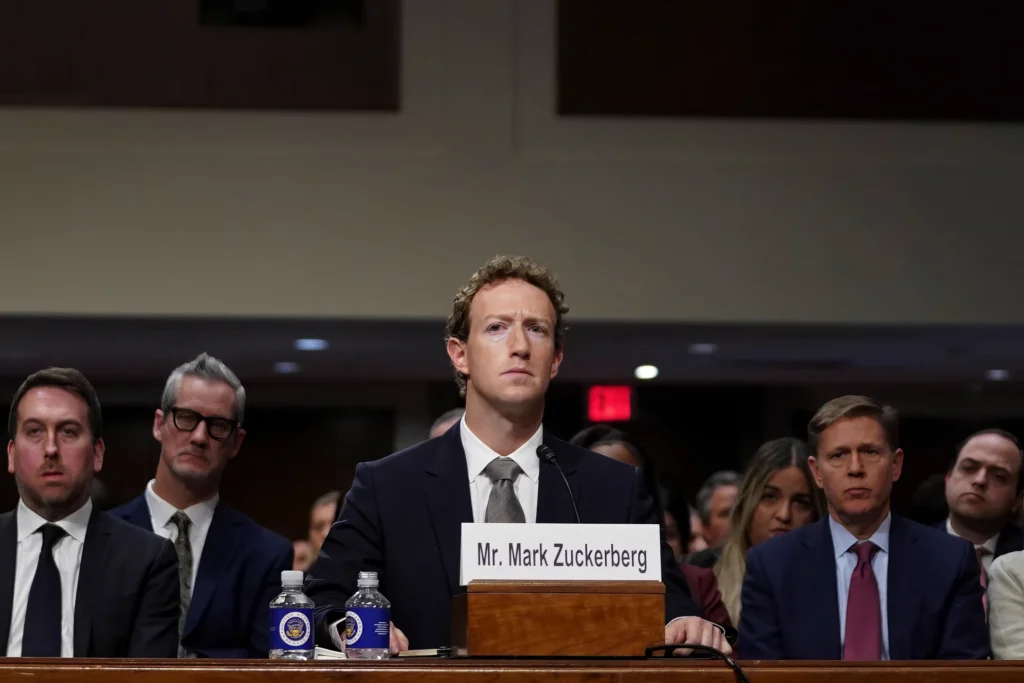
Mark Zuckerberg: The Player of Games
If Musk is deluded and Bezos is predatory, then Zuckerberg is more intimate and unsettling. He read a cautionary tale about selling your soul and treated it as a business plan.
His favorite Culture novel is The Player of Games, which is about an empire called Azad whose entire order, politics, status, and very morality rests on winning a single monstrously complex game. Zuckerberg didn’t just read that book. He built it. The empire is Meta. The game is Facebook and Instagram. We’re the players who never agreed to play.
In the novel, the game of Azad decides your right to exist. In Zuckerberg’s version, the prize is your attention, data, insecurities, and outrage. Every like, share, and furious comment is a move he books as revenue. And he understood the players were exploitable from the start. In his own 2004 instant messages, he described the early users handing over their data as people who “trust me,” and called them, in his words, “dumb f***s.” That contempt became the foundation.
Shoshana Zuboff gave the model its name, surveillance capitalism: a business that watches you, builds a psychological profile, and sells the power to move you.
The rules are simple. First, there can be no other games. A company email later surfaced in the government’s antitrust case put it plainly: it’s better to buy than to compete. Like the empire of Azad, anything that won’t be absorbed gets crushed. Second, the players are disposable. Frances Haugen’s disclosures showed the company knew its platforms were fueling political violence abroad and eroding the mental health of teenage girls, and kept going, because engagement, however toxic, was good for business.
The deepest break with Banks is here. The Culture treats identity as sacred, fluid, and yours alone. Zuckerberg treats it as raw material, now paying to build AI clones of real people and turning a face and a voice into a product. He read The Player of Games correctly. He simply took the villain’s chair.
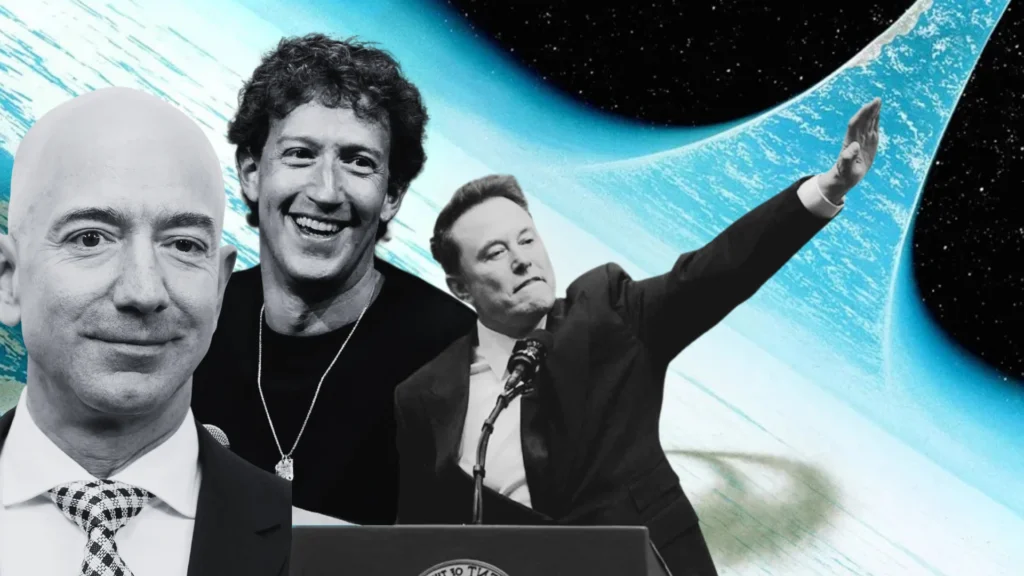
The monster they admire
A deluded techno-king, a corporate predator, and a man who rigged the board. Is it just a coincidence that the three most powerful people in tech all revere the same anti-capitalist author? Banks didn’t only hand us the tools to criticize these men; in Surface Detail, he gave us the man himself.
His name is Joiler Veppers, the richest man in his civilization, so rotted by greed that his signature business is renting server space for virtual Hells where the uploaded minds of the dead can be tortured for profit. He is vain, obsessed with his image, and treats other lives as rounding errors. Veppers reads less like a character than a diagnosis, and these three men are the symptoms.
You can see his cruelty toward workers in Amazon, where human suffering is a line item. You can see his core business, profit drawn from misery, in Meta, which watched its platforms hurt people and counted the harm as engagement. You can see his ego and his contempt for accountability in Musk, who treats public safety as a beta test and the truth as a toy.
There are three heads of the same hydra that Banks warned about, produced by a system that selects for greed, ego, and an appetite for control, and then rewards all three with enormous power. Here’s the final irony. They come to Banks not despite the warning, but because they are now so insulated by money that they can no longer find themselves in the monster on the page. They read about a villain defined by bottomless greed and a planet-sized ego, and they don’t see a warning. They see a role model.

Why it matters
Why spend this long on billionaires misreading a science fiction series from the eighties? Because stories like the Culture are tools. They give us a vocabulary to judge the world we have and a picture of a better one: no wage slavery, corporate kings, or worship of wealth. What Musk, Bezos, and Zuckerberg are doing, through ignorance or design, is a quiet act of disarmament. They offer a future that looks like the Culture and works like a fulfillment center.
The best defense is the source material. Read The Culture books. Start with The Player of Games to watch Zuckerberg’s playbook laid out a decade early, or Consider Phlebas for the full galaxy-spanning sweep. The art is the antidote.
A better world has to be imagined before it can be demanded, and the one thing we can’t afford is to let them own the imagining.
Sources
- Vox, “Why does Elon Musk love this socialist sci-fi series?”
- Literary Hub, “Elon Musk Just Doesn’t Understand the Sci-Fi Visions of Iain M. Banks”
- Blood Knife, “The Culture War: Iain M. Banks’s Billionaire Fans”
- Reactor, “The Revolutionary Optimism of Iain M. Banks’ Culture Novels”
- Strange Horizons, “A Few Questions About the Culture: An Interview with Iain Banks”
- Elon Musk on X, “utopian anarchist of the kind best described by Iain Banks”
- Elon Musk Appears to Give Fascist Salute
- Common Dreams, on Musk and the Swedish union dispute
- PBS News, on discussing the firing of striking workers
- CNBC, on Starbase residents and property rights
- The Verge, “Amazon cancels TV adaptation of Iain M. Banks’ Culture series”
- Deadline, “Consider Phlebas series in works at Amazon”
- CNBC, “Amazon workers seriously injured at more than twice the rate of other warehouses”
- The Nation, “Amazon Says Its Injury Rates Are Down. They’re Still the Highest in the Industry.”
SOURCE · Iain M. Banks, The Culture series (1987–2012). SERIES · The Culture.
Transmissions from ground control